Bubs Organic Rice Cereal | Chewsday Review
It’s been a while since I’ve reviewed a baby rice cereal, so today I bring you Bub’s Organic Rice Cereal. It seems that rice cereal creates some unnecessary hysteria, and there's lots of misinformation floating around. I’m here to clear that up. As a paediatric dietitian who supports both puree and baby-led weaning approaches to introducing solids, I say you absolutely can introduce rice cereal in solids, if you want to. If you’re a parent who prefers not to use rice cereal, that’s fine too (though this review probably isn’t for you!). If you’re a parent who has no clue what to do, then this review might help, and I’d love to invite you to join Baby Mealtimes too.
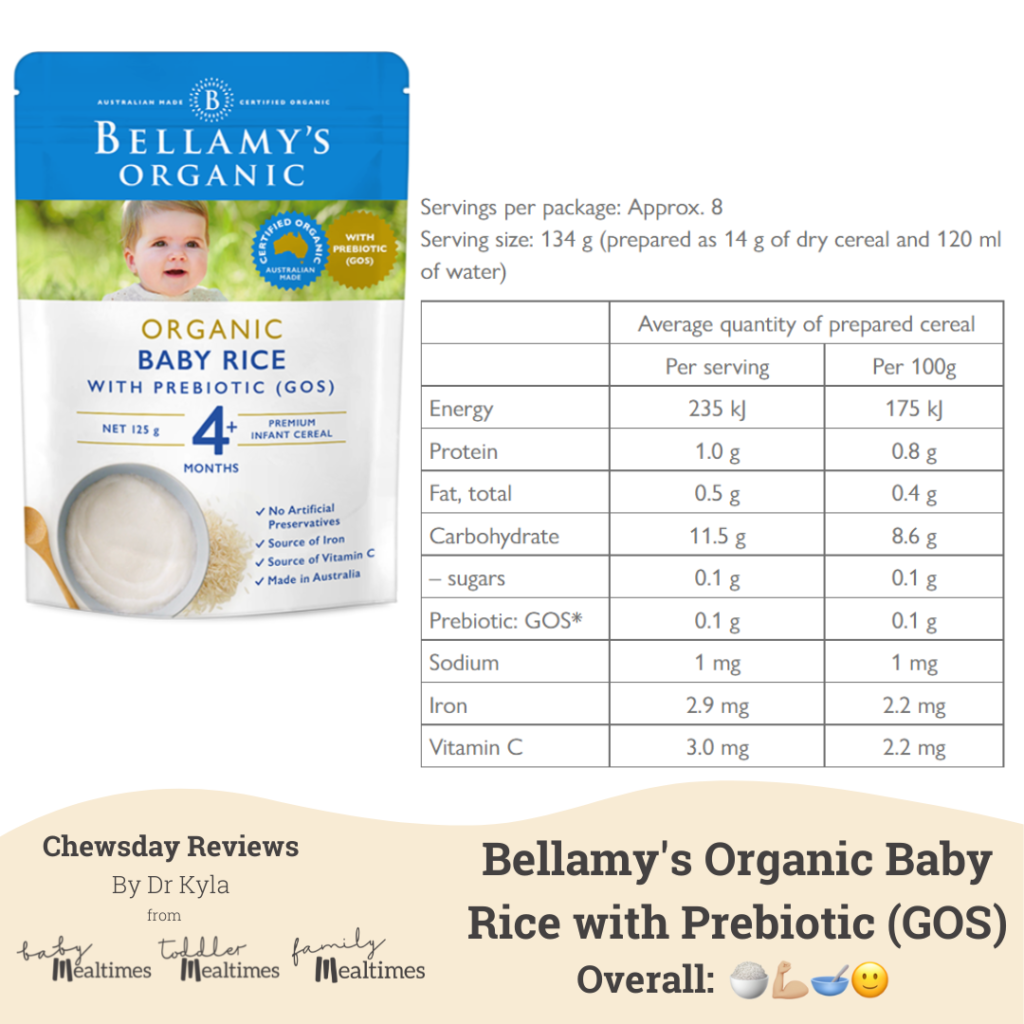
- Organic Rice (99%), Vitamins & Minerals (Vitamin C, Iron, Antioxidant (Mixed Tocopherols)) <1%.
- These ingredients are certified organic, but remember this doesn’t mean they’re any more nutritious than non-organic ingredients.
- Allergens: Nil
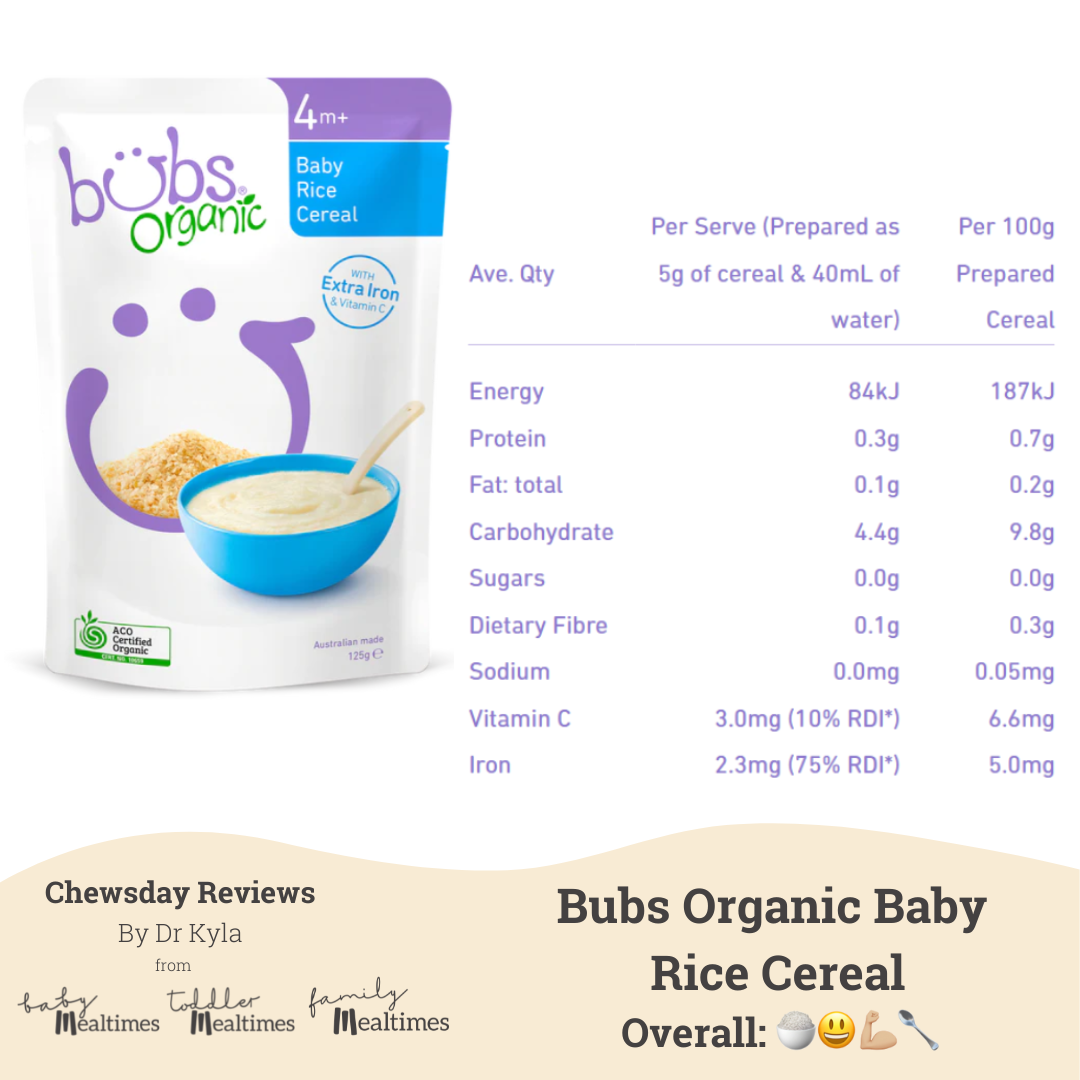
- This product contains a good amount of iron, which is critical for your baby’s brain and immune system development. At about 6 months of age, babies no longer have sufficient iron stores, and breast milk or infant formula alone cannot provide enough iron for their growing bodies. In fact, a baby’s iron requirements are higher between 7-12 months than they are during later childhood. After 6 months of age we want some iron to be coming from food. A 5g serving of this cereal mixed with 40mL of water provides 21% of a baby’s iron requirements.
- This rice cereal has the highest iron content for a baby rice cereal on the Australian market!
- Bubs Organic rice cereal contains no common allergens, whereas some brands contain milk and/or soy. This is more important if you haven’t introduced common allergens yet or your baby has a cow’s milk or soy intolerance.
- There’s no added salt or sugar.
- Rice cereal is super bland, so doesn’t offer much taste-wise for your baby. We’re aiming to offer a range of tastes right from the start, so, I’d recommend adding rice cereal directly into fruit and vegetable purees to add a source of iron (rather than offering rice cereal on its own).
- There’s been some panic about arsenic levels in rice products, so let me clear some things up for you. In a quick summary, all rice can absorb arsenic (a heavy metal) from soil/water (where arsenic naturally occurs, or occurs from pollution). Some areas in the world (e.g., Bangladesh) have higher levels of arsenic contamination than others, but the levels occurring in Australian foods (including rice) are relatively low. Our Food Standards organisation reviews these levels and has indicated no need for concern if your baby eats a range of foods. There would be a risk if your baby had excessive amounts of rice products. This would be rice formula/milk, rice cakes, rice crackers, rice and rice cereal every day, but this is pretty unlikely. So, if you offer a variety of foods, then rice cereal is completely safe to include in your bub’s diet.
- The packet says that this is suitable for babies aged 4 month and over. I would very rarely see 4 month olds who are developmentally ready for solids, so don’t feel like you need to feed this to your 4 month old just because of this statement.
- The nutrition panel says that one serving of this cereal meets 76% of the iron RDI (recommended dietary intake), but earlier I said it meets 21% of a baby’s requirements. Confused? Me too! My 21% has come from the RDI of 7-12 month olds, whereas I think the packaging is referring to the requirements of infants younger than 6 months. However, our Australian Nutrient Reference Values don’t actually have an RDI for 0-6 months, so I’m not sure where their number is coming from!
- “No nasties. No pesticides. No GMOs. No artificial flavours or preservatives.” The term “nasties” always frustrates me. What even is a nasty? I’m still not sure.
- “With extra iron & vitamin C.” True, the added iron makes it an easy high-iron food to introduce, and the added vitamin C will help your bub absorb more iron. Win, win!
- Overall, this is a good option to mix in with first foods, because it’s an easy source of iron, which is one of the most important nutrients in the first 6 months of introducing solid foods.
- Feel free to mix it straight into foods rather than preparing following the directions. If you add to fruit and veg purees, there’s an added benefit of higher iron absorption thanks to the presence of vitamin C. If you’re intent on baby-led weaning without offering puree, then you could use rice cereal to replace a small amount of flour in pikelet/muffin style foods, or buy a self-feeding spoon for your bub to practice self-feeding.
- I’d also recommend including other high-iron foods as your baby develops the skills, like pureed meat, slow cooked meat, lentils, fish and kids Weet-Bix.
The composition of food products changes regularly. The nutritional values of the products in this Chewsday Review were correct at the time of publishing.