Ceres Organic Seaweed Brown Rice Crackers | Chewsday Review
It’s been a while between cracker deep (sea) dives, but I think weed all agree that these Ceres Seaweed crackers need a review. Let’s sea what we’ve got here.

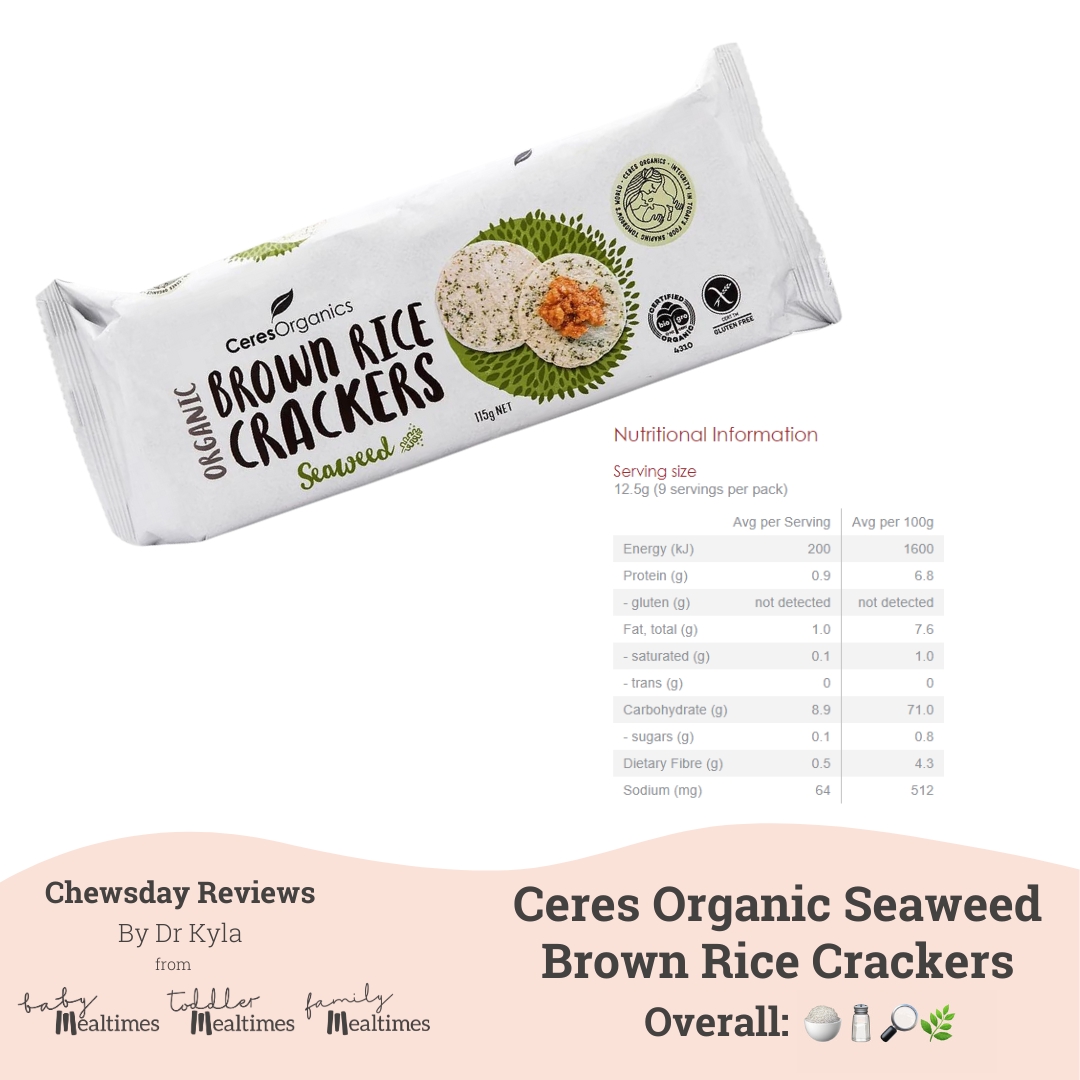
- Jasmine Brown Rice*92%, Sunflower Oil*, Natural Sea Salt, Seaweed 0.7%, Green Tea* (*Certified Organic).
- We know that organic labels tell us how the ingredient was grown, and not about its nutrient content.
- These are only 0.7% seaweed, so I struggle to see how we can really call these “seaweed” flavour.
- Allergens: none.
- May contain: soy, sesame and cow’s milk.
- These are 92% brown rice, which means these are mostly made from whole grain rice. This was the highest amount of brown rice in a brown rice cracker I could find.
- They use sunflower oil, which is considered to be a good quality oil. This might ruffle some feathers, but you can ignore anyone who tells you that seed oils are toxic or inflammatory.
- When it comes to sodium, these are mid-range for rice crackers, but they are above recommendations with 512mg per 100g. Coles Seed & Grains Brown Rice Crackers were the lowest I found with 210mg per 100g. Flavoured crackers tend to be saltier, and the saltiest I found during my search was Sakata Seaweed Crackers with 886mg per 100g (thanks to the soy sauce).
- Despite being made from brown rice, these contain barely any fibre. They contain 4.3g per 100g, which might seem reasonable, but the whole packet is only 115g. Sakata Rice Wholegrain Crackers were more than double this with 9.9g of fibre per 100g. To boost the fibre content, add a high fibre spread or topping.
- These crackers are made in Thailand, so you’re paying for some airmiles there, but it seems most rice crackers are from either Thailand, China or Japan.
- These are seemingly the most expensive rice crackers available at $3.80 per packet or $33 per kg. Coles and Woolworths brands are less than half the cost, both coming in at $1.35 per packet or $13.50 per kg.
- “No nasty stuff”. This language can get in the bin.
- “Certified gluten-free”. This is great for coeliac folk and those with a gluten intolerance, but for the rest of us doesn’t make these more nutritious. It’s not also a special feature, as many brands and flavours of rice crackers are gluten-free.
- “Certified organic”. Again, organic does not equal more nutritious.
- These are expensive rice crackers, and I still think it’s misleading to say they are seaweed crackers.
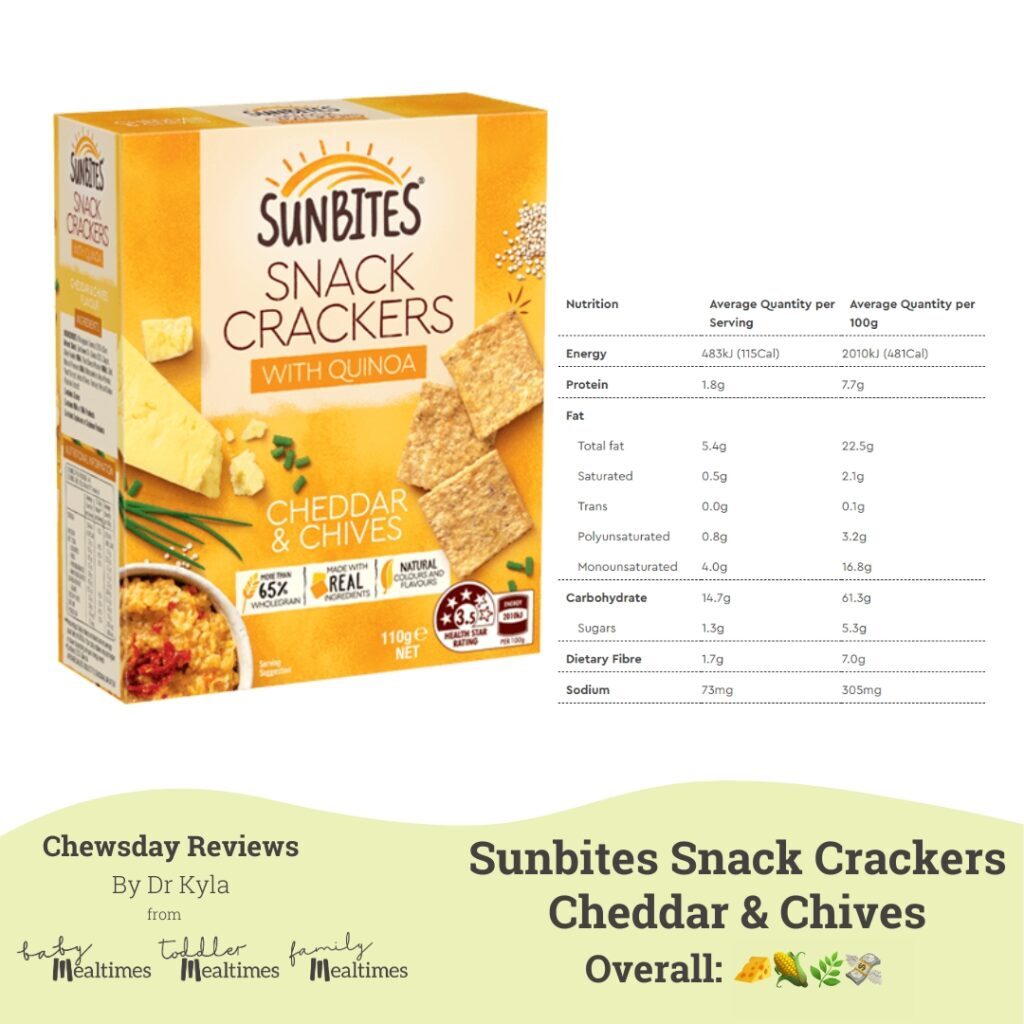
- A cheaper, lower salt option is the Coles Seed & Grains Brown Rice Crackers, but if you’re looking for more fibre, choose the Sakata Rice Wholegrain Crackers.
- Generally I recommend adding a topping when serving crackers, so you could add a high fibre spread like hummus or another veggie-based dip or spread.
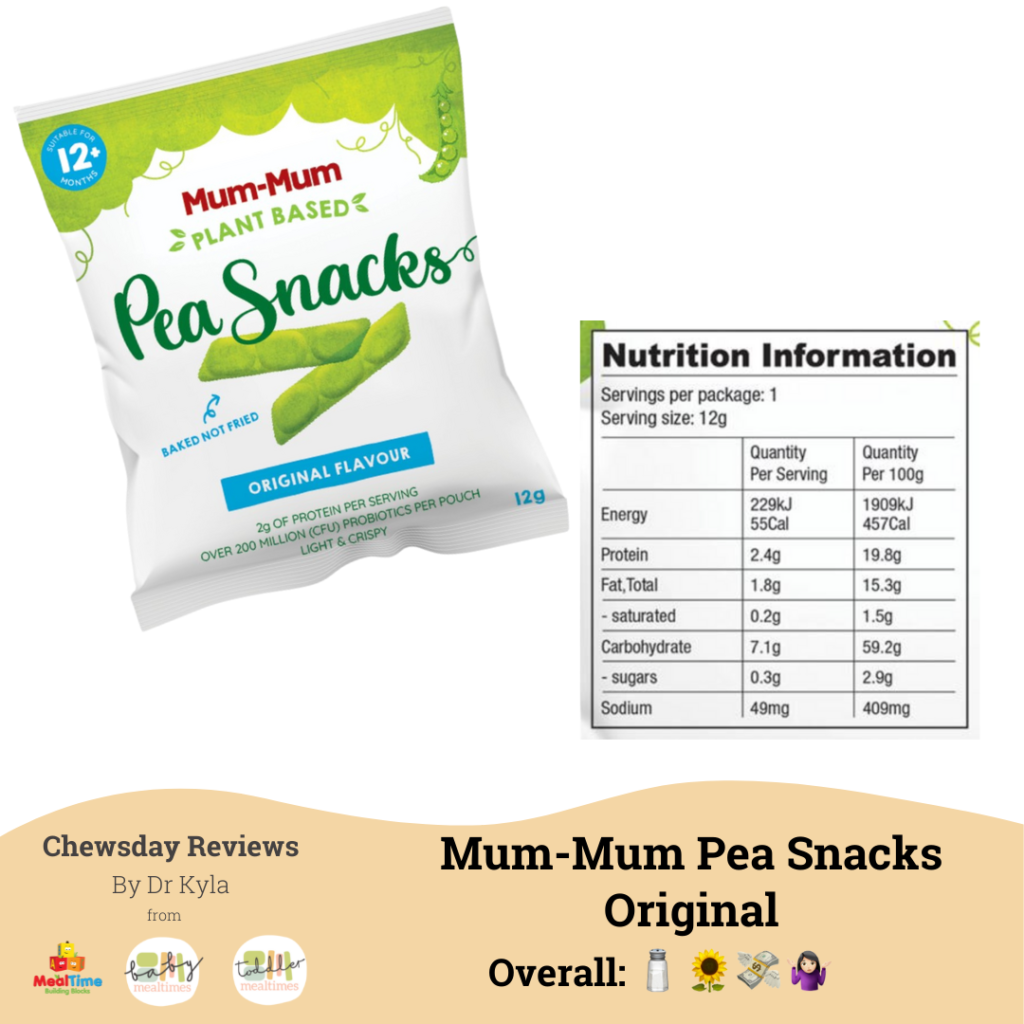
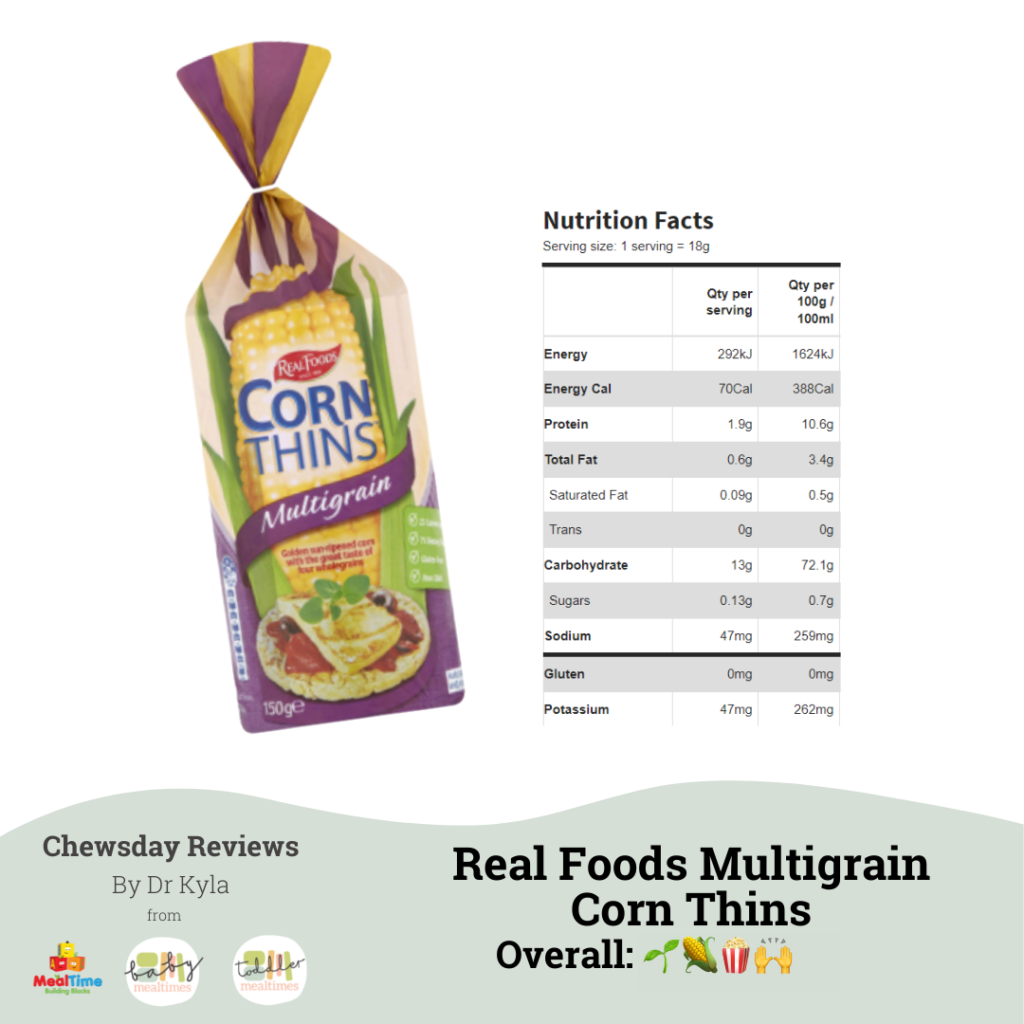
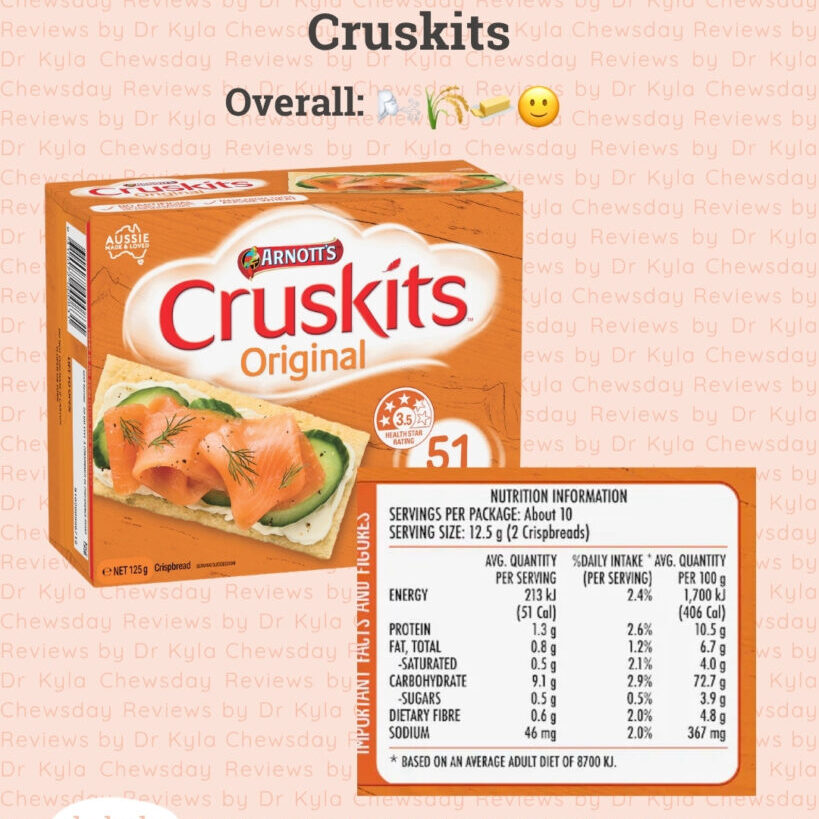
- For babies and young toddlers who are still developing their biting and chewing skills, a dissolvable cracker (like Cruskits) or a crumbly cracker (like rice cakes) are preferred until they can handle sharper pieces breaking off.
The composition of food products changes regularly. The nutritional values of the products in this Chewsday Review were correct at the time of publishing.