Vitasoy Greek Style Soy Yogurt Plain | Chewsday Review
There is such a gap in the market for dairy-free yoghurts with added calcium, and for some reason we just haven’t had any new yoghurts in this space… But dairy-free bubs rejoice, I present to you: Vitasoy Greek Style Soy Yogurt Plain! I haven't kept quiet about my excitement for this product, so read on to find out why. Ps. Dairy and soy free parents- I see you (and stay tuned for next week!)
- Soy milk filtered water, whole soybeans (min 16%), soy protein (3.2%), sugar, cocoa butter, stabilisers (tapioca flour, tapioca starch), mineral (calcium phosphate), natural flavour, sea salt, live vegan cultures, vitamins (vitamin D, vitamin B12). Live vegan cultures: Yogurt cultures: S. thermophilus & L. bulgaricus. Probiotic cultures: B. lactis
- The first ingredient of dairy-free yoghurts is generally water, so I’m not surprised by this.
- Added sugar is another common ingredient in most dairy-free yoghurts as they don’t contain the natural sugar (lactose) found in milk (but you’ll see below it’s not really an issue).
- It’s good to see calcium and vitamins D and B12 added to this product, particularly important for dairy-free children.
- Allergens: Soy
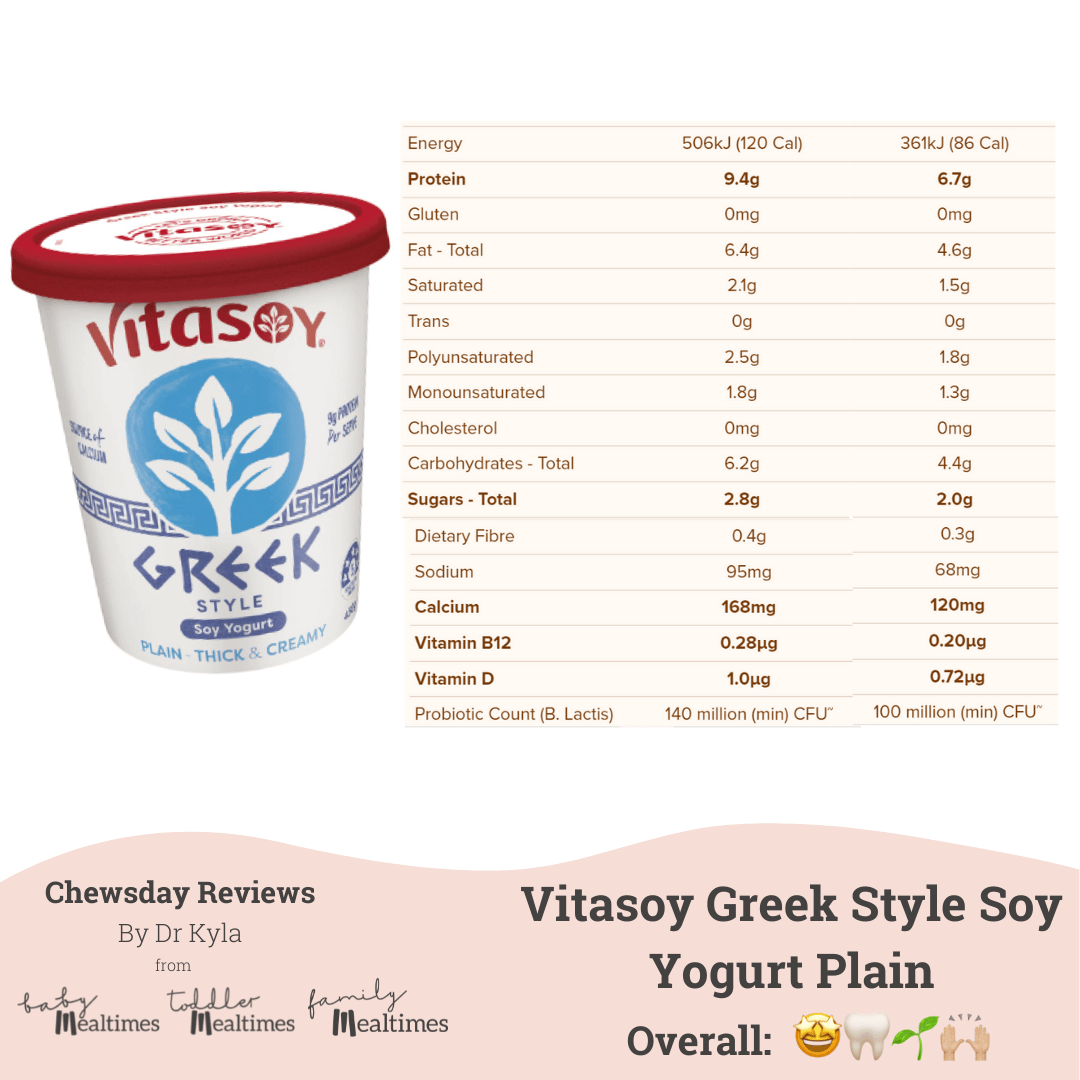
- High in calcium! There’s 120mg per 100g, which is similar to dairy yoghurt and the only dairy-free yoghurt you can buy in Australia (that I’m aware of) at this level.
- Protein is 6.7g per 100g. This is great considering most dairy-free yoghurts are low in protein!
- Sugar is low at 2g per 100g, which is similar to YoPro Dairy Free Yoghurt (1.2g per 100g) and less than Chobani Oat Yoghurt Natural (4.7g per 100g).
- Meets total and saturated fat recommendations, unlike most coconut yoghurts.
- Low in sodium at 68mg per 100g, which is expected for a sweeter product.
- It contains soy. Soy is completely safe to consume (despite whatever you’ve heard) but children with a dairy allergy can often also have a soy allergy, so I’m sorry to say this isn’t for them. If your kiddo is soy-free too, an oat, coconut or nut-based yoghurt, such as almond, would be best (but it’s so hard to find one with calcium and without high sugar and saturated fat).
- Dairy-free yoghurts are a bit more costly, with this one being $12.79 per kg. This is similar to other leading competitors.
- As this is a new product, it’s currently only being sold in Woolworths. Hopefully we’ll see it on other supermarket shelves soon.
- Yogurt. I just dislike the look of the word without the ‘h’. But maybe that’s just me… Vitasoy is an international brand, hence the US spelling.
- “Live cultured with probiotics.” It’s great to see this has added probiotics as, unlike dairy yoghurts, plant-based yoghurts don’t naturally contain probiotics.
- “Thick and creamy & typical greek style yogurt zing.” I’ve had lots of messages saying this has been a hit with toddlers so far. Yay!
- “Source of calcium, protein, vitamin D & B12”


- As far as dairy-free yoghurts go, this is currently the best one on the market. It’s high in protein and calcium (big win!) and low in sugar and saturated fat.
- If your little one is allergic to soy, Chobani Oat Yoghurt Natural is a more suitable option, and is calcium fortified.
- If your child is lactose intolerant, a lactose-free yoghurt is still the best option as they are identical to dairy-yoghurts in taste and nutrition.
- If your kiddo doesn’t like yoghurt, that’s ok! There are plenty of other dairy-free options, such as plant-based milks. Just remember to check that they’re calcium fortified.
The composition of food products changes regularly. The nutritional values of the products in this Chewsday Review were correct at the time of publishing.
Hungry for More? Related Reviews
Sorry, we couldn't find any Reviews that match that criteria.