Baby Mum-Mum Rice Rusk | Chewsday Review
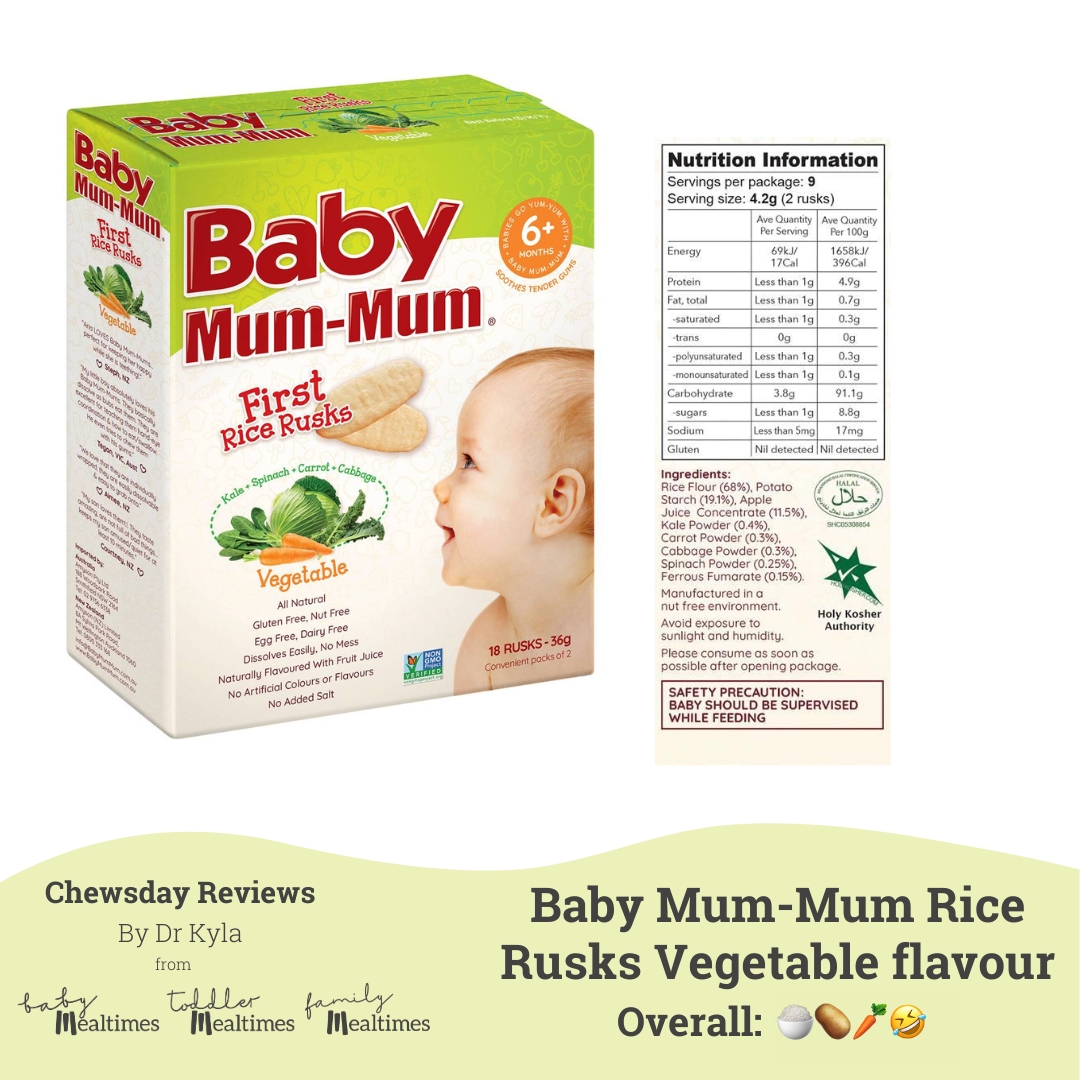
This week we’re back in the baby food aisle with Baby Mum-Mum First Rice Rusks in vegetable flavour. Baby Mum-Mum rusks have a bite and dissolve texture, so are a little different to more traditional, firm teething rusks. These are a popular option for the nappy bag, so let’s take a closer look.
- Rice flour (68%), potato starch (19.1%), apple juice concentrate (11.5%), kale powder (0.4%), carrot powder (0.3%), cabbage powder (0.3%), spinach powder (0.25%), ferrous fumarate (0.15%).
- These are made from Japonica rice, which is one of two major categories of rice (the other being Indica rice) and includes a variety of short and medium grain rice.
- This product states that it is free from common allergens and manufactured in a nut free environment.
- Fat, saturated fat and sodium (salt) content are all within healthy guidelines.
- These have a bite and dissolve consistency, which means they start to dissolve as soon as your baby puts it in their mouth. This texture can also be helpful for helping babies first learn to bite. Adding a wet topping to start with (like puree) will help them dissolve even more easily in your baby’s mouth.
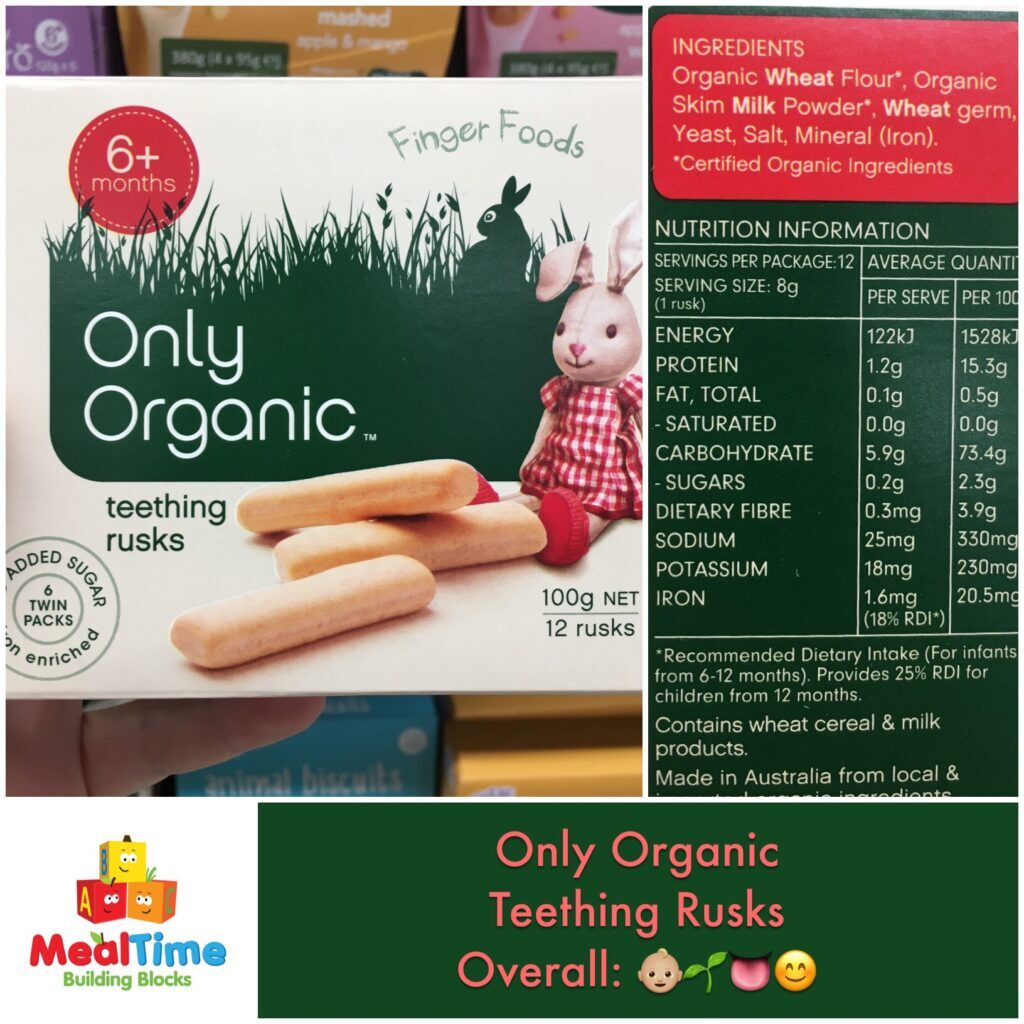
- These contain some iron (as Ferrous Fumarate), but the nutrition panel doesn’t tell us how much they contain per serve so it’s hard to really compare to other rusks. By my calculations two rusks would contain about 6.3mg of ferrous fumarate which comes to about 2.1mg of elemental iron. This is actually pretty decent.
- Thanks to the addition of apple juice concentrate the sugar content is 8.8g per 100g, which is technically within the guideline (less than 15g per 100g) but is more than other rusks with no added sugar. Given each rusk is only 2.1g, a packet of 2 rusks has less than 1g of sugar.
- These rusks don’t really make a substantial snack on their own. They’re mostly rice flour and potato starch, so on their own they provide a small amount of carbohydrates and some iron.
- Each packet (2 rusks) is about 43c, which might not seem too bad until you calculate that they work out to over $100 per kg! That’s some seriously expensive rice and potato starch.
- Individual packets aren’t great for the environment.
- “Vegetable Rusks”. Labelling these as a vegetable rusk is a complete and utter joke. The kale content of each rusk is 0.0084g, and the spinach content is 0.005g. These are really only added so the packaging can include pictures of vegetables to trick parents. The blurb on the back says “simply made with rice & real fruits & vegetables to introduce your baby to new tastes while providing wholesome nutrition”. This is blatantly misleading. Even the most sensitive of fussy eaters would not taste 0.005g of spinach. They probably would taste the apple juice though, which conveniently isn’t pictured.
- “All natural.” Sure, but how “natural” is cabbage powder really?
- “No artificial colours or flavours.” True.
- “Dissolves easily, no mess.” Also true, but if you add a topping things tend to get a bit messier.
- Baby Mum-Mum rusks make a great vessel for spreads and leftover purees, but I wouldn’t recommend offering them regularly on their own.
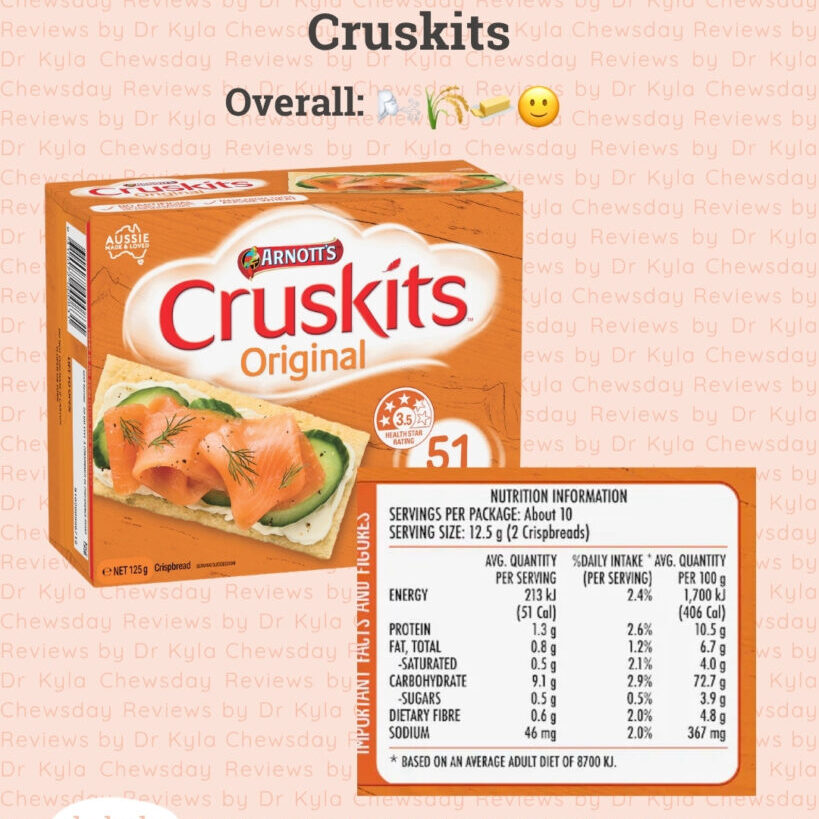
- Cruskits can be used in a similar way, but do contain some common allergens and are slightly more advanced in texture.
- These are convenient (but expensive) crackers to have for on the go, but once your baby is older and their biting and chewing skills have advanced, you can move onto rice or corn cakes for a cheaper option. If you’d like more support with texture progression, check out the Baby Mealtimes and Toddler Mealtimes memberships.
The composition of food products changes regularly. The nutritional values of the products in this Chewsday Review were correct at the time of publishing.