
Does this sound familiar? It’s 5.30pm, everyone’s hangry, and you’re fielding three different meal requests while repeating “no, we’re not having that” for what feels like the seventeenth time.
If family mealtimes are a struggle in your house, you’re not alone. Childhood eating is a rollercoaster, especially with picky or fussy eaters. Some weeks feel smooth, and others can feel like every meal is hard.
The good news is that peaceful family meals are possible – without cooking three different dinners, bribing with dessert, or turning every bite into a negotiation.
Let me take you through an evidence-based framework, built on the Division of Responsibility in feeding, that helps real families create calmer, more confident mealtimes in real life.
Here's what you'll learn:
This is a longer article with a bit more depth, so grab a cuppa if you feel like it before diving in.
Why family mealtimes feel so hard (and how to make them more peaceful)
How we were fed as kids shapes our own approach
There’s a chance that you grew up being told to finish your plate before leaving the table, or 'earning' dessert only after eating all your vegetables. Many of us were taught that leaving food on our plate was wasteful, that we couldn't trust our bodies to tell us when we were full, and that dessert was a reward for eating ‘healthy’ foods first.
We know that our parents did what they thought was right with the information they had at the time.
But now we also know that these approaches, while well-intentioned, can backfire. When we tell kids to finish everything on their plate, we're inadvertently teaching them to ignore their own internal hunger and fullness cues. When dessert is used as a reward, our kids learn that certain foods are more valuable than other foods. These patterns can follow kids into adulthood, affecting their relationship with food for years to come.
Unlearning our ingrained beliefs while trying to feed our own families is really, really hard. You’ve likely found yourself automatically saying things your parents said, even when you know that there might be a better way.
There’s an overwhelming amount of parenting information out there
Have you ever scrolled down the rabbit hole of conflicting nutrition advice online? One article tells you that grains are essential, while another insists they’re inflammatory. Someone on Instagram tells you to avoid anything with artificial food colours. And don’t even get me started on the comments sections.
All this information – when you’re just trying to feed your kids – can be overwhelming. When everyone seems to have a different opinion, how are you supposed to know what’s actually best? Add to this the mental load of planning meals that work for different family members’ preferences, dietary restrictions and schedules, and it’s no wonder so many parents feel completely over it by dinnertime.
Families have got a lot more going on
There’s no doubt that the modern schedule has made parenting a lot more complex than generations before. You’re juggling work, school pickups, activities and everything else that comes with family life, which can make sitting down for family meals that much harder. It’s not uncommon for families to deprioritise stopping to sit and eat together, choosing instead to eat meals in shifts around after school activities.
Related offerings
The reality is that family meals look different now than they did decades ago, and that's okay. But there are still plenty of benefits to eating together when you can.
The key is figuring out how to make them work for your actual life, not some idealised version of family dinner that exists only on Instagram.
About feeding families and raising confident eaters
The evidence-based approach that’s changing mealtimes
You may have already come across the Division of Responsibility (DOR) in feeding. This approach, developed by dietitian Ellyn Satter, has been studied extensively and is recommended by feeding professionals worldwide. The basic idea is beautifully simple: parents decide what, when, and where food is offered, and kids decide whether and how much to eat.
This might sound unusual at first – what if your child chooses not to eat anything? But research consistently shows that when children are given appropriate structure around meals without pressure to eat specific amounts, they naturally regulate their intake and are more likely to try new foods over time.
Mealtimes memberships give you all the support you can imagine to apply this simple framework to complex family life.
This is fundamentally different from the "clean your plate" mentality many of us grew up with. Instead of teaching kids to ignore their body's signals, it helps kids be in tune with their bodies. Instead of creating power struggles around food, it eliminates them by clearly defining who's responsible for what.
The bigger picture around family mealtimes
A lot of the focus is placed on what kids are eating at family meals. But research shows that children who participate in regular family meals (meals with at least one adult and child eating together) are more likely to experience higher self-esteem, greater sense of resilience and better academic performance, and a lower likelihood of substance abuse, depression, and disordered eating.
It doesn’t have to be perfect. Eating together can be chaotic and messy, but it doesn't have to be stressful. Focusing on the atmosphere and experience of family meals is just as beneficial as focusing on the food itself.
Signs it’s time to try a new approach
It might be time to consider a different approach to family meals if:
Remember, this isn’t at all a reflection of your parenting. Feeding kids is challenging, and we're all doing our best.
But if you feel frustrated or overwhelmed by mealtimes, then I'd love to help you find a new way of doing things.
What happens when you follow the Mealtimes Method
Peaceful mealtimes are possible
Peaceful mealtimes don't mean that your kids will suddenly love every food you serve, but they do mean that food stops being a source of conflict and stress in your household.
The difference between being considerate and catering is crucial here. Being considerate means including foods you know your family members can eat alongside new or challenging foods. Catering means making entirely different meals based on individual preferences. The former sets everyone up for success; the latter often creates more work and more picky eating over time.
Confident kids start with confident parents
When you feel confident about your approach to feeding your family, that energy trickles down to your kids. Children pick up on our anxiety around food, and when we're stressed about what or how much they're eating, they feel that pressure too.
Building food confidence in children isn't about forcing them to try everything or eat certain amounts. It's about creating an environment where they feel safe to explore, to say no, and to trust their own bodies.
You approach menu planning with a clear structure
Effective family meal planning isn't about creating elaborate weekly menus or spending hours in the kitchen. And you’re certainly not trying to force certain nutrients into your kids at every meal. Instead, it’s about offering variety over time and trusting that balanced nutrition happens across days and weeks, not at every single eating occasion.
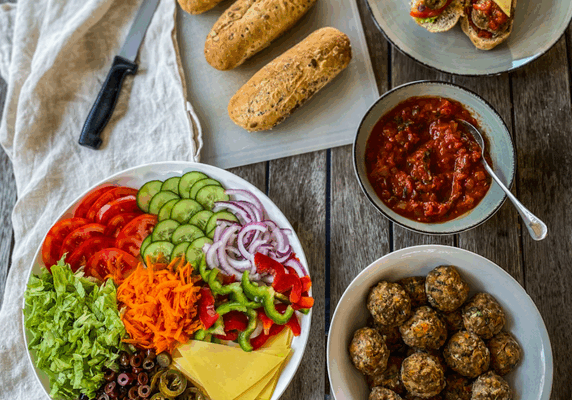
This approach also considers the practical realities of cooking for younger children who are still developing their eating skills and food preferences. The #samefoodsametime approach is about making thoughtful modifications that set everyone up for success.
First steps you can take today
Start with awareness
Begin noticing your family's current mealtime patterns. What foods do you typically serve? How do family members interact during meals? What pressure or expectations exist around eating?
Examine your own food beliefs
Many of us carry some interesting, and not always factual, beliefs about food and eating. Take some time to think about the messages you received about food growing up. Are these beliefs serving your family now, or might they be creating unnecessary stress?
Remember that progress beats perfection
There's no such thing as perfect family meals, and trying to achieve them will only create more stress. Focus on making gradual improvements rather than overhauling everything at once.
Your child's relationship with food and their body is built over years, and changes throughout their life. It's never too late to start.
Professional guidance and a clear framework supports lasting change
Knowing who to listen to and what advice to follow is something parents navigate all the time. When you decide to follow evidence-based guidance and a clear framework, you get to shut out all the other noise.
Knowing who to listen to and what advice to follow is something parents navigate all the time. When you decide to follow evidence-based guidance and a clear framework, you get to shut out all the other noise.
Instead of piecing together information from dozens of different (often conflicting) sources, you get a comprehensive approach that's been tested and refined over years of working with real families.
Perhaps most importantly, having ongoing support during the transition to new feeding practices makes a huge difference in your success. The journey to peaceful family meals isn't always linear, and it doesn't happen overnight. But with the right framework, appropriate support, and realistic expectations, it is absolutely possible.
Your family deserves to enjoy meals together, and you deserve to feel confident about feeding your loved ones without the stress and worry that might be dominating your dinnertime now.
Ready for more peaceful family mealtimes? Learn more about our evidence-based approach that's helped thousands of families feel more confident.

Related offerings

Expert-led feeding guidance that grows with your child
One membership, three dedicated stages tailored to your child. Start where you need, switch when you want.

(4 - 15 months)
Starting solids
Introducing allergens
Finger food and puree recipes

(1 - 4 Years)
Fussy Eating
Toddler-tested snacks and meals
Confidence through the chaos

(5 - 12 years)
Weekly family menu
School lunchbox ideas
Navigating body conversations