Milo | Chewsday Review
Milo is an Aussie classic, but believe it or not as a child I wasn't a big fan! Nowadays we have it in our cupboard, but I would still choose a hot chocolate over a hot milo, and we seem to mostly use it on ice cream. Milo chit chat aside, check out the review to see how Milo fairs nutritionally.

- Extract of Malt Barley Or Malt Barley and Rice (Total Extract 38%), Milk Solids, Sugar, Cocoa, Minerals (Calcium, Iron), Maltodextrin (Corn), Vitamins (C, B3, B6, B2, D, B12), Emulsifier ( Soy Lecithin)
- I did not expect Milo to contain rice! Is anyone else surprised by that?!
- Allergens: cow’s milk, gluten (barley) and soy.
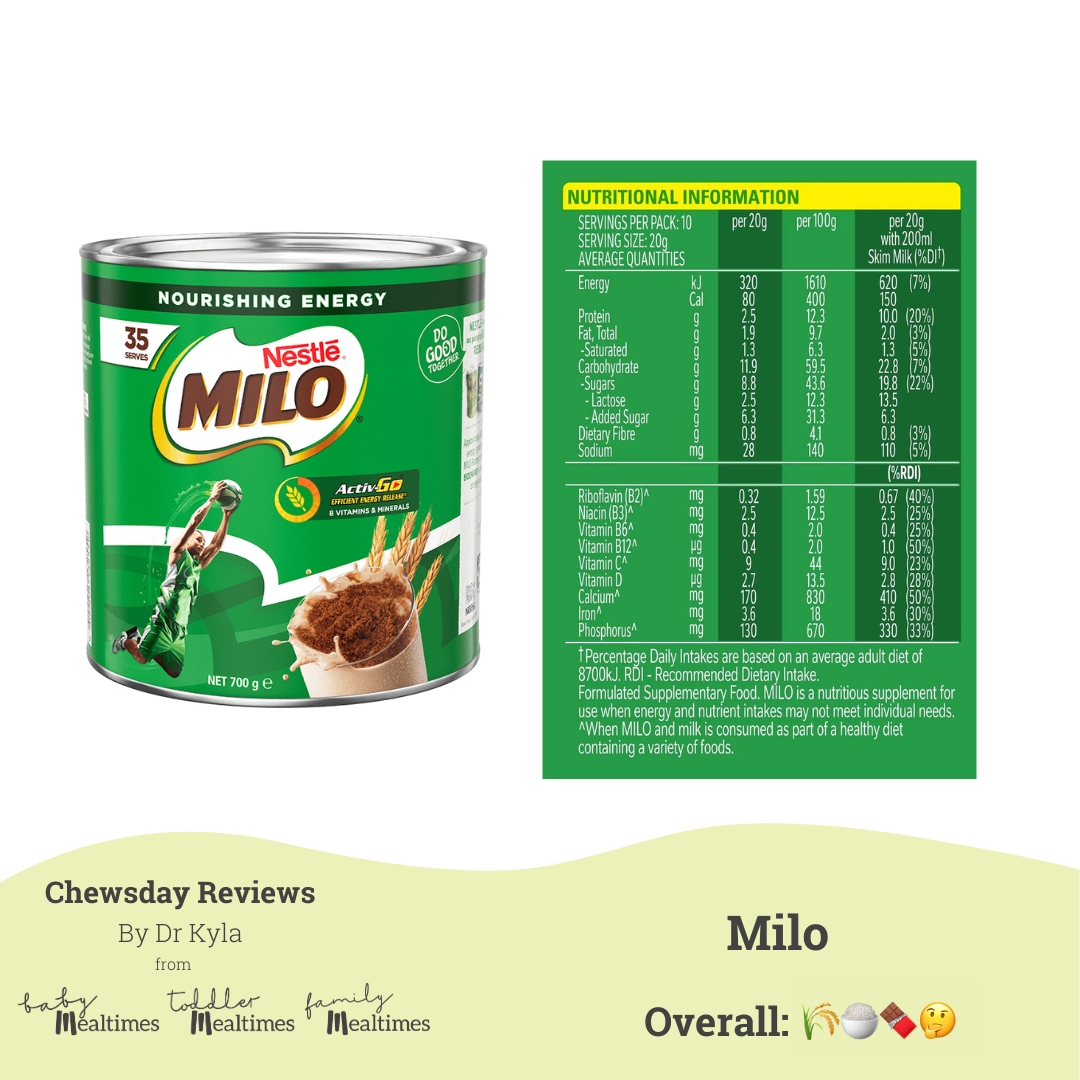
- Milo is one of the few iron-fortified drinks on the market, and one serve (which is only 20g or 3 teaspoons) provides 3.6g of iron. That ends up being just over a third of a school-aged child’s recommended daily iron intake. This is an obvious bonus over other chocolate flavoured drinks like choc milk or Up&Go.
- Milo is also fortified with other nutrients like some B vitamins, calcium and Vitamin D, which are added in similar amounts to Up&Go.
- A serve made up with 200ml of milk contains about 10g of protein, which is 50% of a 4-8 year old recommended protein intake. This just proves how easy it is for children to meet and exceed their protein needs.
- Milo is within guidelines for sodium and saturated fat when prepared following the instructions.
- If you buy the value tin (1kg), it works out to be about 30c per serve, so even considering you add milk, this is much cheaper than Up&Go (~$2 each) and Brownes No Added Sugar Chocolate Milk ($2.50 each).
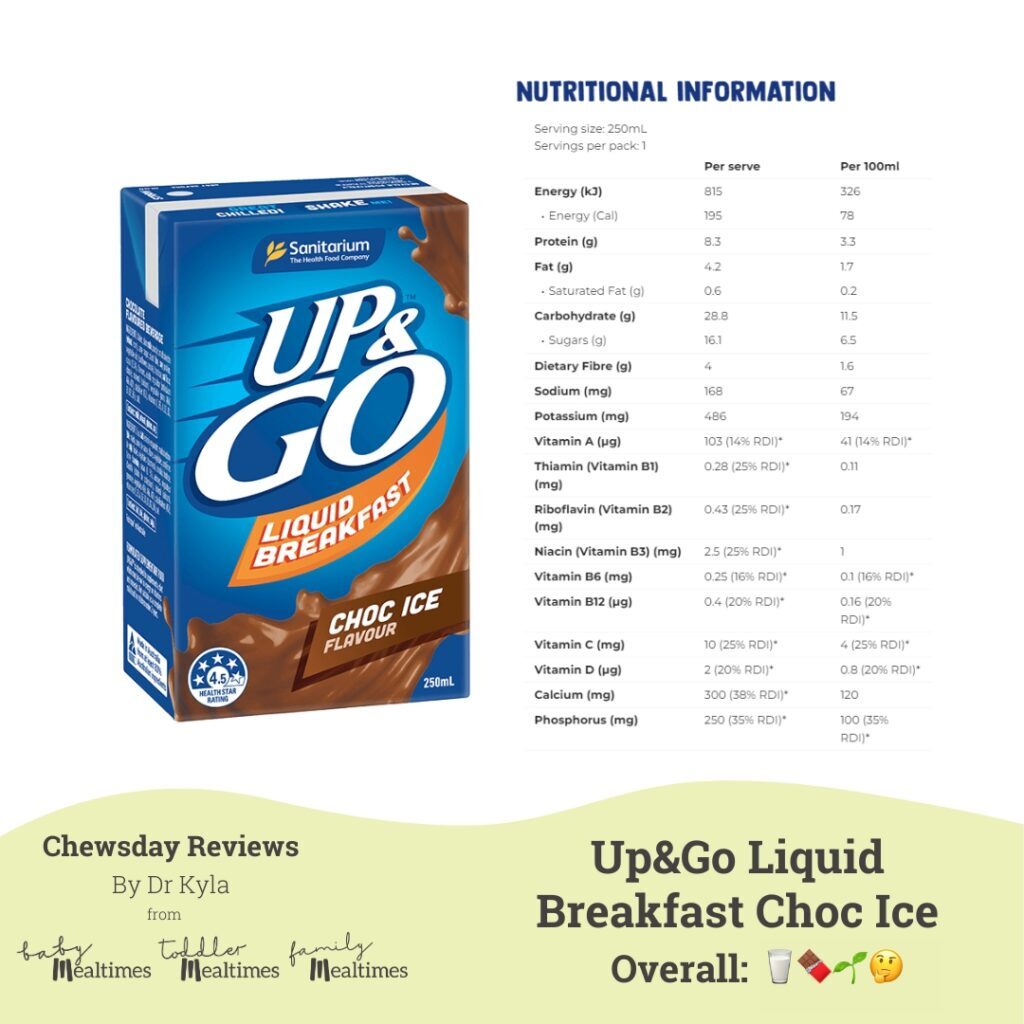
- With less than 1g of fibre per serve, Milo isn’t contributing towards your child’s daily fibre needs, so Up&Go gets the points here for having 4g per serve (250ml). School-aged children are recommended to have 18-24g of fibre per day!
- A 20g serve of Milo powder contains 8.8g of sugar, of which 6.3g is labelled as added sugar. This means that the actual Milo powder is roughly 30% added sugar, but when it’s prepared with milk (following the directions), total sugar is 9.7 per 100ml. Technically this is just above recommendations for drinks (we’re aiming for <7.5g per 100ml) but most of this is coming from the naturally occurring sugars in milk and only 3.15g per 100ml is added sugar. So, it’s about 1.5 tsp of added sugar per 200ml serve. I’m surprised by how little this works out to be, so perhaps this isn’t a total negative?! But I do suspect most people are using more than 20g of Milo 🫣
- “Rainforest Alliance Certified”. This means the cocoa used in Milo is sustainable and responsibly produced.
- “Made in Australia from 55% Australian ingredients”. This means almost half of the ingredients are imported, which isn’t ideal for supporting Australian farmers.
- “Low GI”. This means that in theory the sugar in Milo is absorbed slowly into the bloodstream and can result in a slower release of energy. In reality we all digest and absorb sugars from food differently.
- To be completely honest, I’m surprised Milo doesn’t contain more added sugar, but impressed to see a 20g serve contains more iron than 2 Weet-bix!
- If you wanted to boost the fibre, you could experiment with adding Milo to a smoothie. I imagine a banana and Milo smoothie could be quite tasty. I’ve also used Milo to make Bliss Balls, which works well.
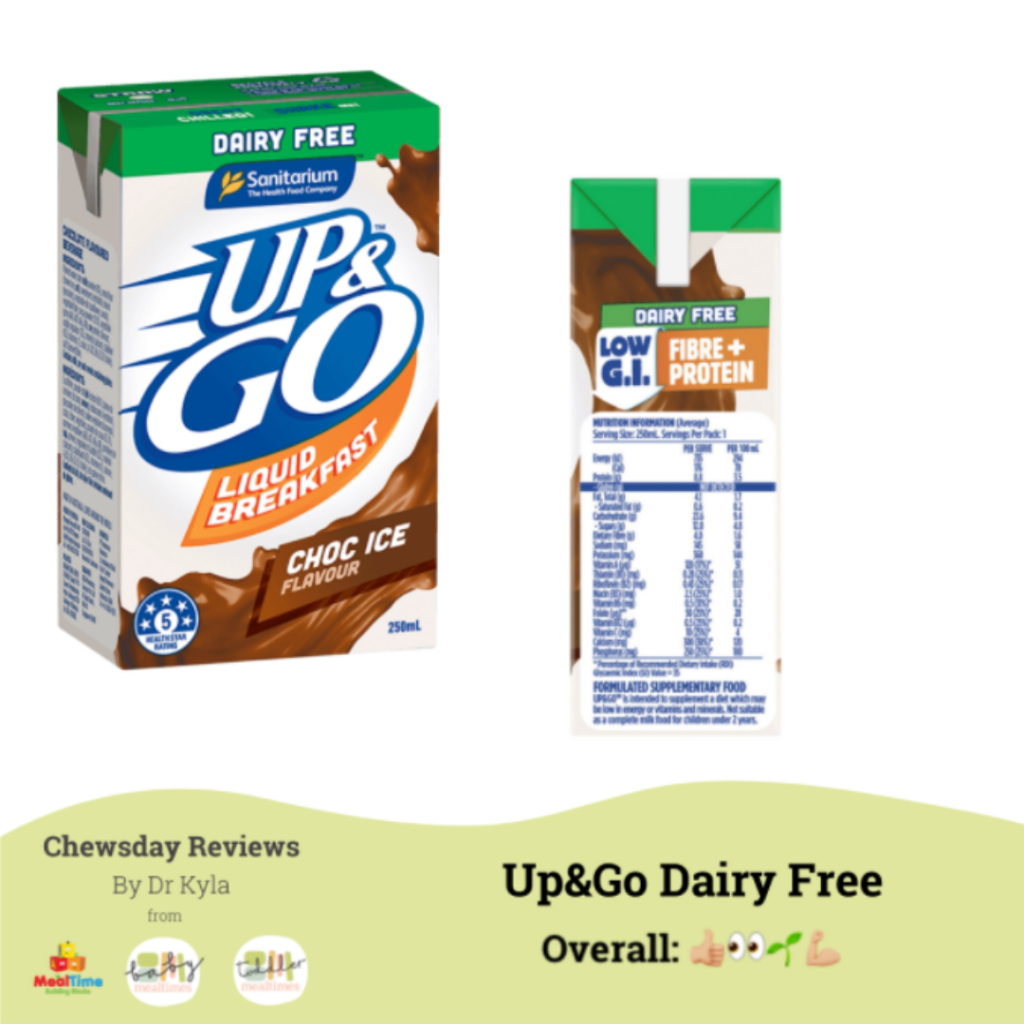
- In terms of a ready-made chocolate drink, Up&Go doesn’t contain iron but does contain some fibre and a similar amount of sugar. If you’re looking for a no added sugar option, my family have enjoyed the Brownes No Added Sugar Chocolate milk.
The composition of food products changes regularly. The nutritional values of the products in this Chewsday Review were correct at the time of publishing.