Up&Go No Added Sugar | Chewsday Review
Let's see if Up&Go No Added Sugar still hits the sweet spot...

- Water, skim milk powder (8%), cereal flour (rice, oat), sweeteners (erythritol, steviol glycosides), vegetable oils (sunflower, canola), plant fibre, cocoa powder (0.5%), soy protein, vegetable gums (460, 466, 407), flavours, acidity regulator (potassium citrate), mineral (calcium), stabiliser (452), vitamins (C, B3, A, D2, B2, B1, B12, B6), salt.
- Allergens: milk, soy.
- May contain: wheat, gluten.
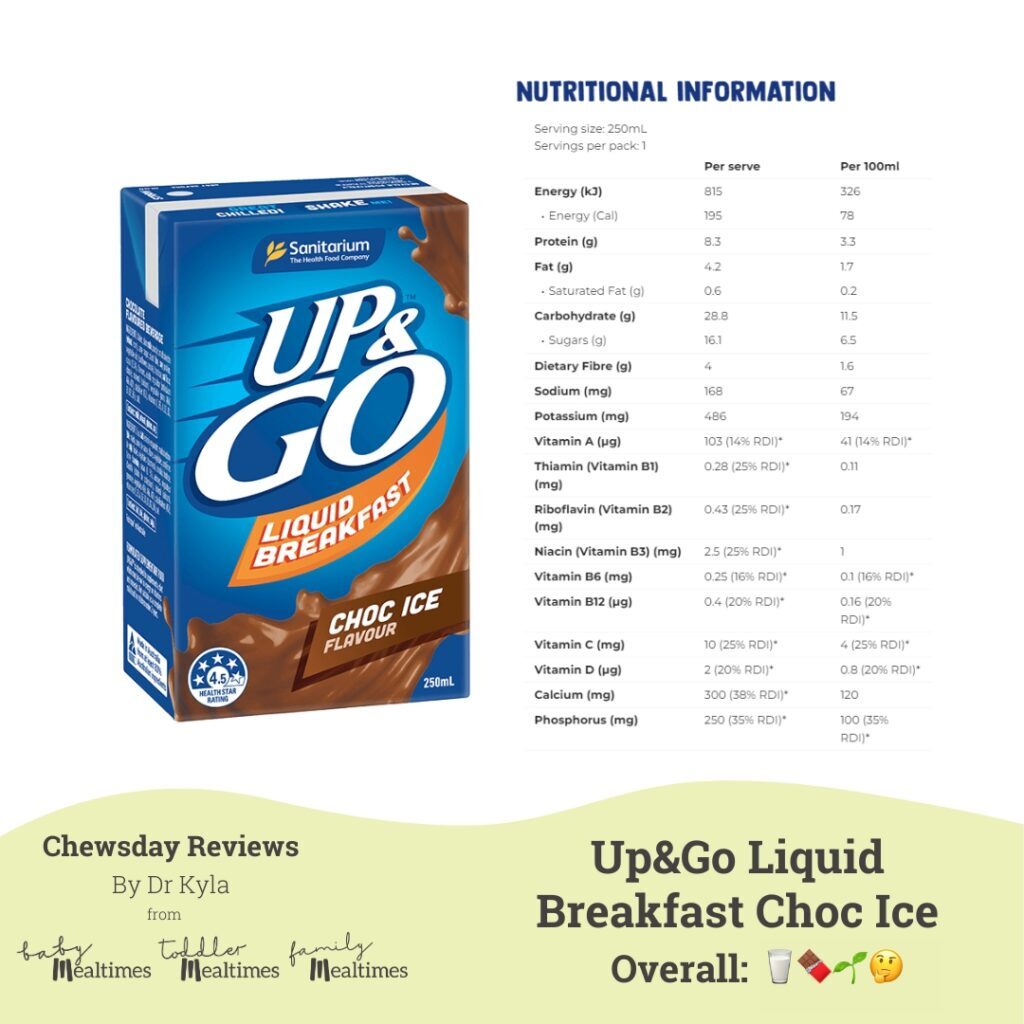
- Fibre content of 4.0g per serve is above my target, thanks to the addition of cereal flour and plant fibre.
- At 4.3g per 100 ml, sugar is well within guidelines (we’re aiming for less than 7.5g per 100ml in drinks). This is lower than regular Up&Go (6.5g sugar per 100 ml) as sweeteners erythritol and steviol glycosides are used in place of cane sugar, maltodextrin and sucrose.
- With 300mg of calcium per serve, Up&Go No Added Sugar provides 60% of a toddler’s daily calcium needs, and over 40% of a young school-aged child’s needs. Per 100ml, the calcium content (120mg per 100ml) is roughly the same as cow’s milk (128mg per 100ml).
- Protein content is similar to the amount in regular cow’s milk.
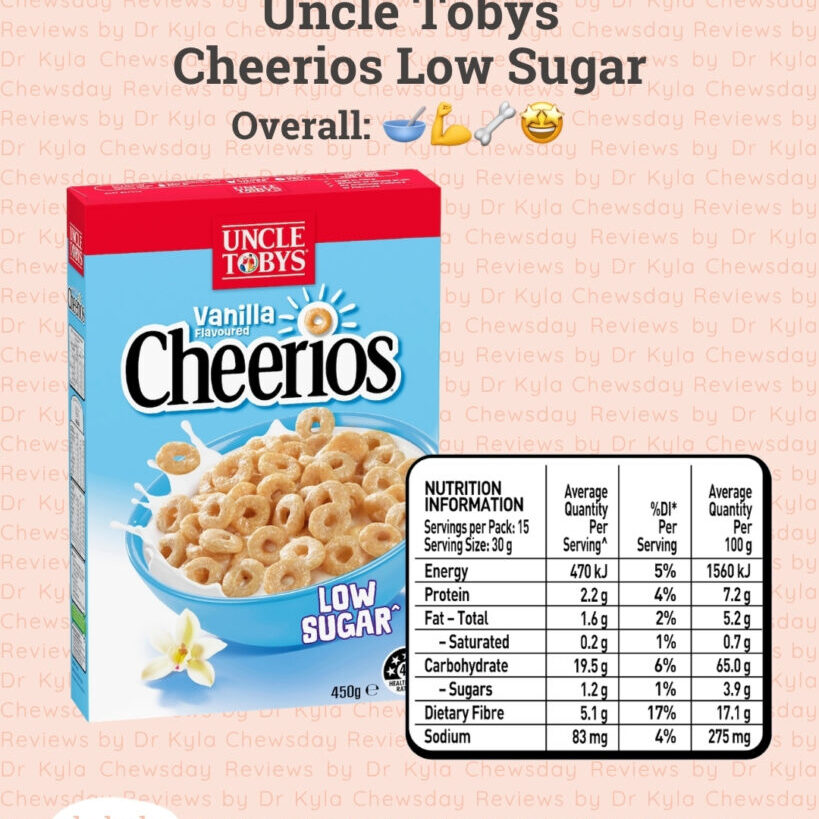
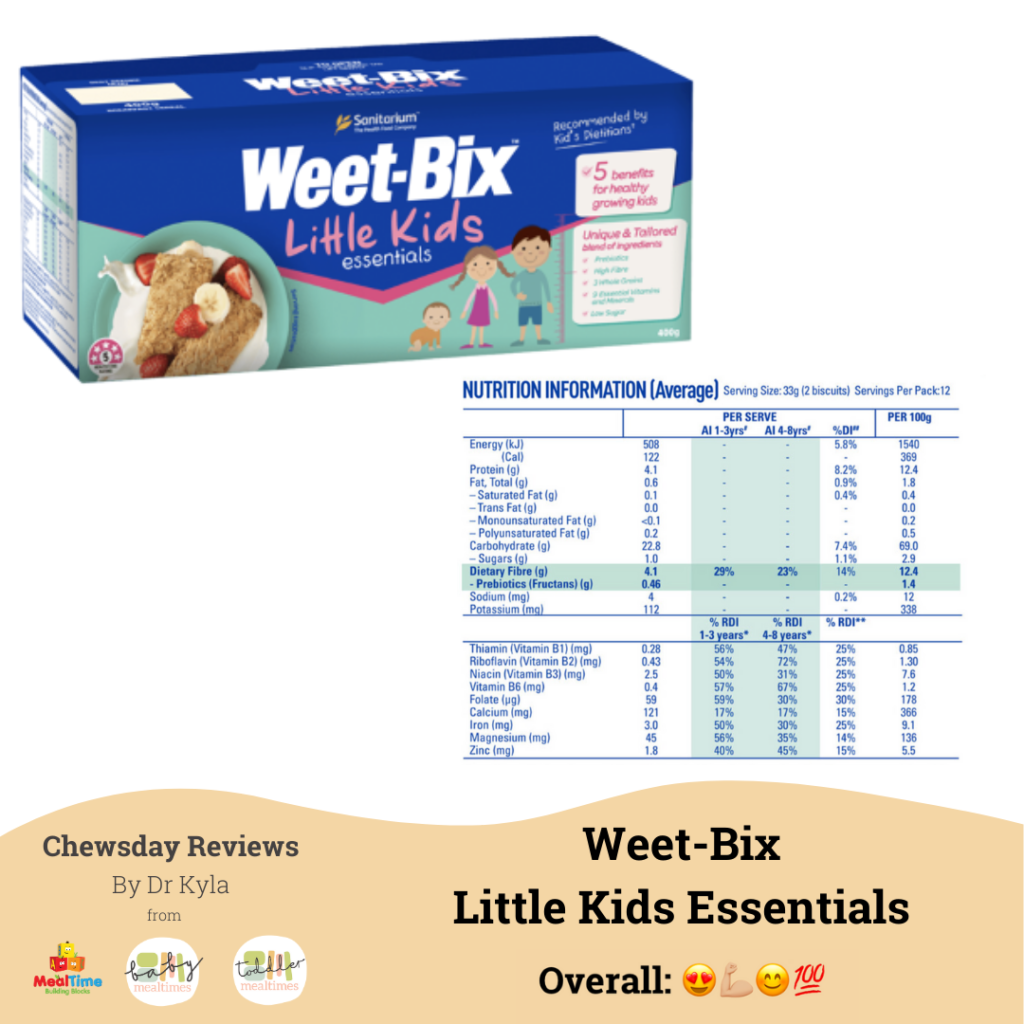
- Like regular Up&Go, this is fortified with calcium and vitamins, but no iron. This is a big downside compared to iron-fortified breakfast cereals like Weet-Bix, Low Sugar Cheerios or Sultana Bran.
- The biggest difference between this and regular Up&Go is the use of sweeteners instead of sugar, giving a small reduction in sugar content. Sweeteners and other food additives are tightly regulated in Australia, but we don’t have a lot of evidence for their use in children. Choosing a sweetener (artificial or not) therefore isn’t my standard recommendation.
- At $13 per pack of 6 ($2.17 each), convenience does come at a cost! In comparison, a serve of cereal and milk or Milo and milk works out less than $1 per serve.
- Drinks don’t keep us full for as long as food. If you’re serving Up&Go as a breakfast option, I’d add a piece of fruit or toast on the side to avoid a hangry kid before snack time.
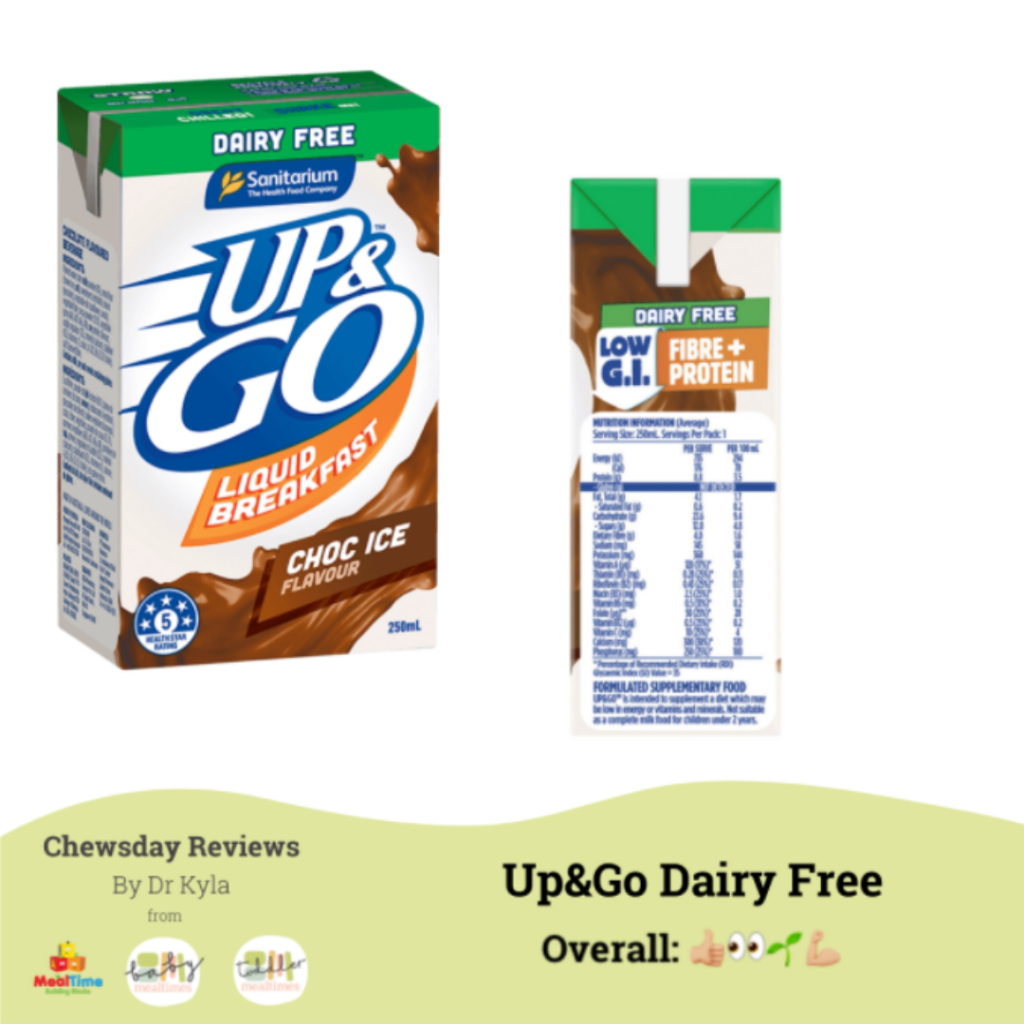
- “Protein & fibre of 2 Weet-Bix & milk.” Slightly more fibre and slightly less protein, but not too far off!
- “No added sugar. No artificial sweeteners.” The pack also states that “95% of total sugar comes from milk powder and the remaining sugars are native to the cereal & fibre ingredients.” These claims are true, but the total sugar content is only 2.2g (around half a teaspoon) less than regular Up&Go.
- “The right type of energy.” As opposed to the wrong type of energy?
- “Protein, high fibre, high in calcium, low GI”. Correct on all fronts.
- This has a 5 star health rating, which is higher than the traditional Up&Go.
- Like regular Up&Go, the no added sugar version scores well for fibre and calcium content. There’s a small reduction in sugar content (half a teaspoon) between this and regular Up&Go thanks to the use of non-artificial sweeteners. Sugar is causing a lot of fear at the moment (unnecessarily in my opinion) but a swap to sweeteners isn’t my first suggestion. In this case, the choice comes down to individual preference, and you can choose what feels right for your family.
- The biggest downside (for regular or no added sugar Up&Go) is the lack of iron, so I wouldn’t recommend it as a staple breakfast option over iron-fortified cereals like Weet-Bix, Low Sugar Cheerios or Sultana Bran. However, it is convenient and could be included as part of the meal for kids who find breakfast tricky, or a snack on-the-go.
- A smoothie made with oats or crushed Weet-Bix is another portable option which contains iron. You can find my smoothie formula and recipes in the Toddler and Family Mealtimes memberships.
The composition of food products changes regularly. The nutritional values of the products in this Chewsday Review were correct at the time of publishing.