Babybel Cheese | Chewsday Review
Hands up if you requested a review of Babybel Cheese. There should be about 5000 of you! This is one of the most requested reviews, which tells me Babybel Cheese is very popular. Let’s see how this mini wheel of cheese performs in today’s Chewsday Review…
- Milk (98%), salt, bacterial culture. microbial rennet.
- This is one of the shortest ingredients list I’ve seen for a ‘pre-packaged’ cheese snack.
- Allergens: Milk.
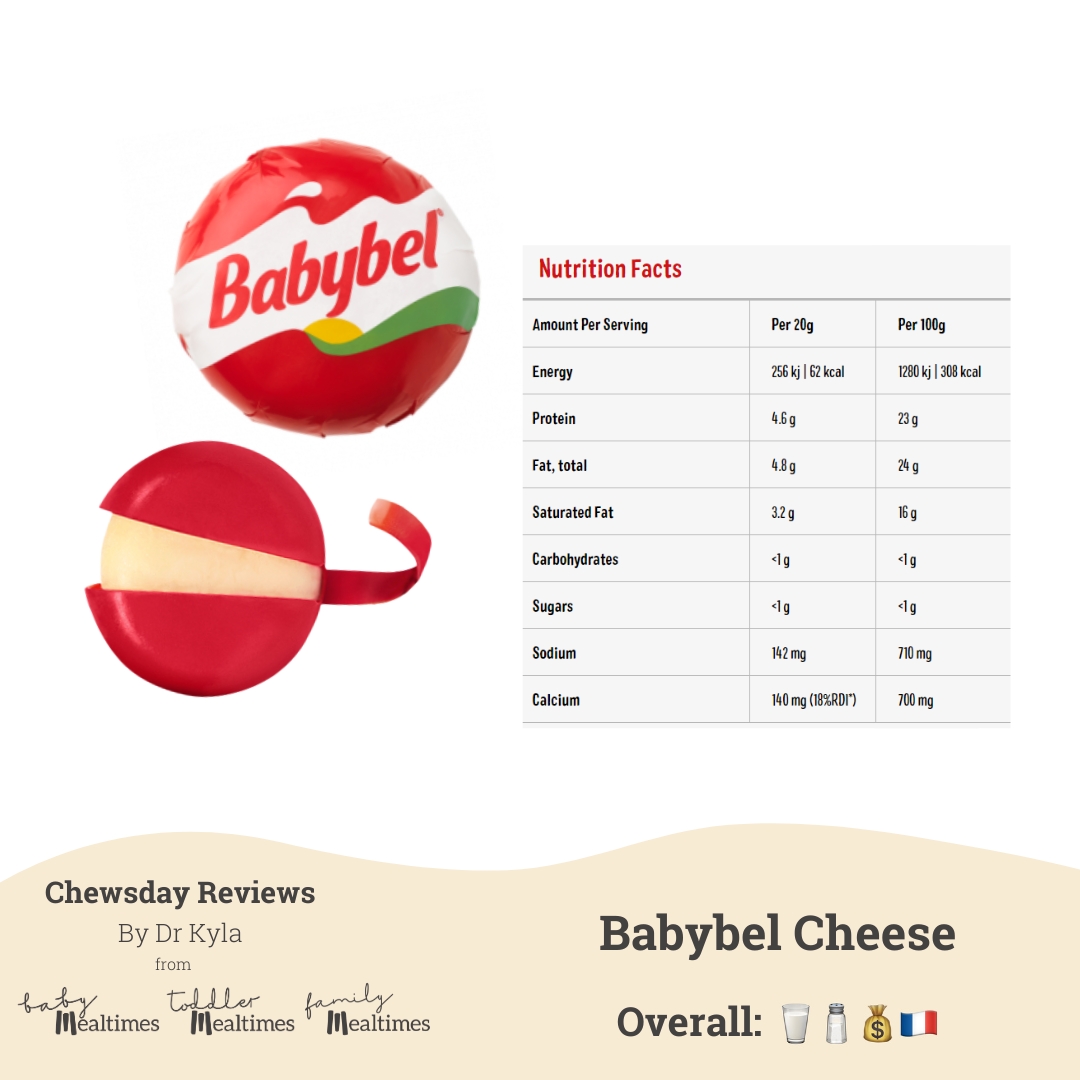
- Babybel cheese contains a decent amount of calcium (700mg per 100g), which works out to about 3 times as much as yoghurt, but it comes in a smaller serving so there’s less total calcium. One Babybel works out to be 28% of a toddler’s calcium requirements and 20% of an older child’s requirements. Regular cheese has a similar calcium content.
- As with most cheeses, this doesn’t contain any added sugar so is low in overall sugar (<1g per 100g).
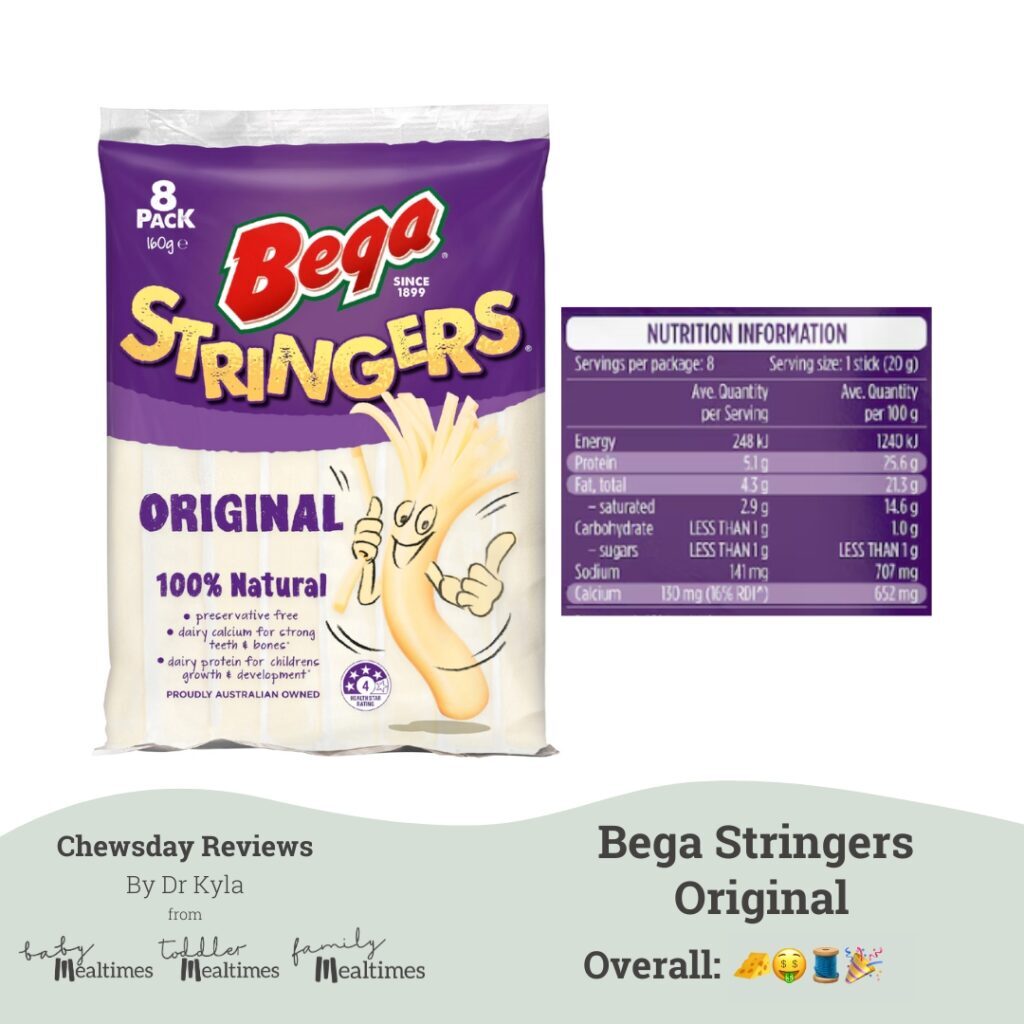
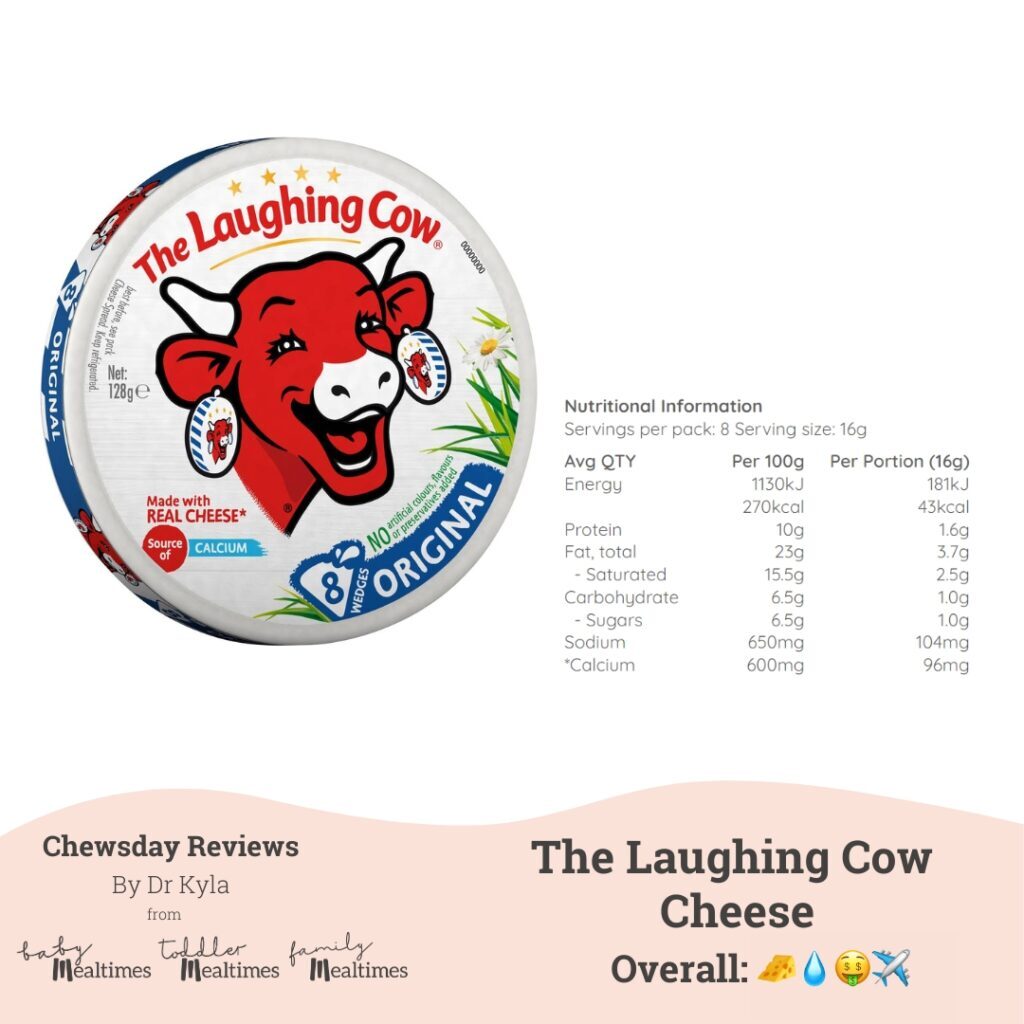
- Babybel’s protein content is similar to most hard cheeses and Bega Stringers, but has double the protein of Laughing Cow cheese. This isn’t a huge deal though because most Australian children tend to get plenty of protein.
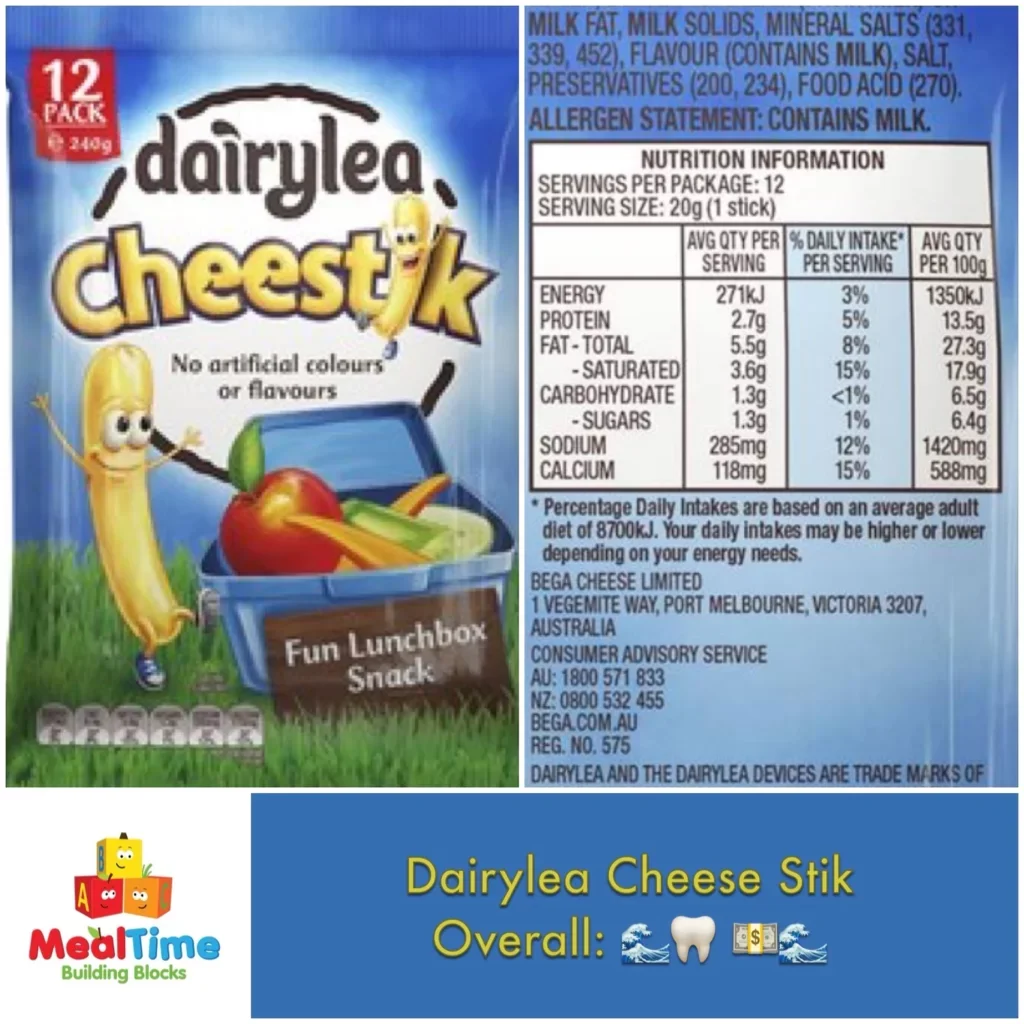
- Sodium is fairly high (710mg per 100g), but most cheddar cheeses are around this mark. Remember from our previous cheese reviews that salt has an integral role in the production of cheese, inhibiting bacterial overgrowth and balancing the acidity. The average salt content of cheese is about 620mg per 100g, making it a high salt product. It’s almost impossible to change these characteristics and still make cheese.
- There is 16g of saturated fat per 100g, which is above healthy guidelines but most cheddar cheeses contain ~21g of saturated fat, so this is actually lower than average. For context, cheese is made from the protein and fat components of milk, with the addition of an acidic component and an enzyme called rennet. The solid components are separated and pressed into the final shape. Really, cheese is just concentrated milk, so all cheeses are going to have a relatively high fat and protein content.
- The bigger 200g pack, comes to $45 per kg which is expensive compared to regular blocks of cheese, which tend to be $10-20 per kg depending on the brand.
- Did you know Babybel are made in France? This means it’s imported, so unfortunately doesn’t support Aussie farmers.
- “Natural cheese.” Honestly the obsession with ‘natural’ food is ridiculous and confusing. I’d like to know what unnatural cheese looks like. Cheese doesn’t naturally come out of the cow shaped like this, in nice little wax packaging…
- “Source of calcium.” Correct.
- “Made with pasteurised milk.” Being pasteurised just means that the milk used has been heat treated to kill bacteria before they turned it into cheese. This seems like a strange claim when it’s actually quite hard to find unpasteurised dairy products in Australian supermarkets. Perhaps it is included as many European cheeses are traditionally made with unpasteurised milk and as we’ve learnt today, Babybel is French.
- Pre-packaged cheeses, like Babybel and Bega Stringers, are convenient ways to offer cheese to your child. Nutritionally, Bega Stringers are very similar but are slightly cheaper and are made in Australia from 98% Australian ingredients.
- I quite like these for a grab-and-go lunchbox option, although many schools would request for you to at least remove the outer wrapper.
- If you’re looking for an alternative with less packaging, you could buy regular cheddar cheese instead.
The composition of food products changes regularly. The nutritional values of the products in this Chewsday Review were correct at the time of publishing.