
If you’ve started solids with your baby (or are getting ready to), it’s likely you’ve heard about introducing the most common food allergens. But you might not be sure exactly when, how or which foods fall into the allergen category.
The rates of food allergies in children are the highest they've ever been, so it’s completely understandable that introducing allergenic foods can feel scary.
Here's what you need to know: current guidelines recommend introducing the 9 common allergens before your baby's first birthday. Early introduction and frequent exposure actually reduces your baby's risk of developing a food allergy.
This post will walk you through which foods are considered common allergens, when and how to introduce them, and how to do it with confidence instead of fear.
What are the 9 common allergen foods?
First, it’s important to know that, technically, any of us could develop an allergy to any food at any time. But most allergies show up in early childhood, and over 90% of them are caused by the nine common allergens. These are:
To reduce your baby’s risk of developing an allergy to these foods, introduce them before your child’s first birthday, and then continue to offer them regularly.
This applies to all babies, even those with a family history of allergy, or who have eczema or other identified allergic conditions.
If your baby does have a diagnosed allergy to a food then you need to completely avoid giving that food to your child.
The Mealtimes method
Our national guidelines to help prevent food allergy are really clear about what to do. Mealtimes Members get support for how to actually follow them, with answers to the most common questions, plus recipes, meal ideas, tips and tricks.
If you're feeling overwhelmed, why not try a month of Baby Mealtimes to help you get confident.
How to introduce allergens safely: step-by-step tips
Introducing allergens doesn't have to feel overwhelming. Here's how to do it with confidence:
Looking for support with introducing allergens?
If you want clear, evidence-based guidance that walks you through each allergen with recipes, meal ideas, and answers to every "what if" question, a Baby Mealtimes membership includes:
Related offerings




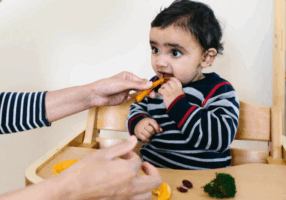
A Baby Mealtimes Membership has everything you need to know about introducing allergens to your baby. We can answer those questions that might come, like "no one in my house eats shellfish, what should I do", "how do I give fish to my 10 month old?" or "does sesame oil count as sesame?". If it's not answered already inside our allergen content hub, you can post it in the members-only Facebook group or ask on a live Q&A and get an answer from a paediatric dietitian.
If you're feeling anxious about this process, that's okay. But with the right information and a clear plan, you can introduce allergens with confidence.


Expert-led feeding guidance that grows with your child
One membership, three dedicated stages tailored to your child. Start where you need, switch when you want.

(4 - 15 months)
Starting solids
Introducing allergens
Finger food and puree recipes

(1 - 4 Years)
Fussy Eating
Toddler-tested snacks and meals
Confidence through the chaos

(5 - 12 years)
Weekly family menu
School lunchbox ideas
Navigating body conversations