
Recent reporting by the ABC suggests that toddlers who drink large amounts of cow’s milk are at risk of death, as a result of iron deficiency anaemia.
To say this is problematic reporting is an understatement.
Let me be clear from the start: Drinking cow’s milk is not causing death in kids. But let’s make sense of this article and the current hype about cow’s milk and iron status.
Cow’s milk recommendations
Current Australian guidelines recommend 2-3 servings of dairy foods per day for children, as part of a balanced diet. This includes cow’s milk, yoghurt, cheese and plant-based milk alternatives. Ideally, we don’t want kids having much more than this, because it makes it hard to fit in enough other core foods that provide a range of other nutrients (including iron).
The article says: Blood specialist Dr Sally Campbell says babies aged one-and-under should not be given cow's milk at all, and children aged one-to-five should be restricted to two cups per day.
My thoughts: For babies under one, cow’s milk should not be given as a drink because we don’t want to displace breastmilk or infant formula. Using cow’s milk in baking or on cereal is absolutely fine. For children 1–5 years, I’d suggest aiming for less than 500mL of milk per day (as part of the 2-3 daily servings of dairy foods) to allow room for a variety of core foods.
Does cow’s milk cause iron deficiency?
There is no body of evidence to suggest that drinking cow’s milk as part of a balanced diet causes iron deficiency.
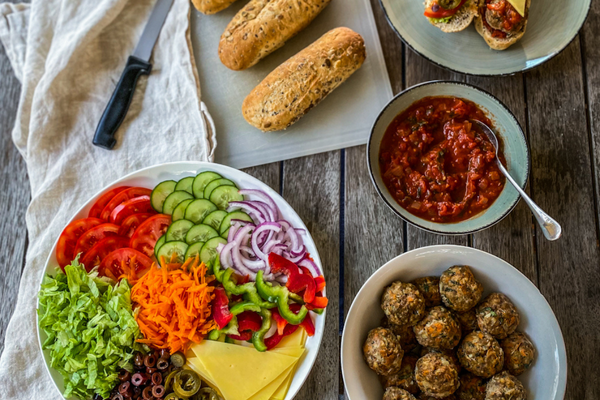
The article says: Dr Campbell said having too much cow's milk "directly prevents" young children from being able to absorb iron, when given in excess. "So, if they had, say, three cups of cow's milk and then followed it up with meatballs, it wouldn't matter. Their gut would not be able to absorb the iron," she said.
My thoughts: Cow’s milk doesn’t contain any iron, so it won’t contribute positively to iron stores in the body. There is some truth that calcium can interfere with iron absorption, which is important with iron supplements. But the whole “milk blocks iron absorption” commentary is really an over-simplification and over-exaggeration of the evidence.
Realistically, if a child is having 3 glasses of milk, they’re unlikely to have an appetite for anything, including meatballs. The biggest issue is likely to be the drink displacing the meal. Sure, I would support the reduction of milk quantity overall, but the meatballs aren’t a waste.
Cow’s milk can contribute to reduced intake of iron if large amounts of milk are replacing food in general. But this would be similar if it were juice, or soy milk, or any other drink.
Cow’s milk and iron supplements
This is where the research shows it’s worth considering when to offer cow’s milk. If your child is taking an iron supplement, keep it separate to milk if you can, because we’re really focusing on replacing that iron. But day-to-day I don’t want you to assume that having milk cancels out the iron content of any food at the same time.
Why are kids drinking lots of milk?
One of the bigger picture questions from this article is about why children might be relying so heavily on cow’s milk as a source of food. In my experience, kids are drinking big amounts of cow’s milk for a reason. Sometimes this is related to food insecurity and cost of living pressures (ie/ a family is struggling to afford any food) and sometimes this is related to a child’s restricted intake or feeding difficulties in general (ie/ they don’t have the skills or ability to eat other foods for a variety of reasons).
If your child (12mo+) is drinking much more than 500mL of cow’s milk (or any other liquid apart from water) then I’d want to know more about why this is happening. I’d encourage you to reflect on your own circumstances and consider checking in with your GP or paediatric dietitian if you weren’t able to reduce the quantity on your own.
If feeding your family feels hard, a mealtimes membership is a great first step.
Iron deficiency and death
Iron deficiency can progress to iron deficiency anaemia if left untreated. But this isn’t something that happens overnight and it doesn’t just result in death.
The article says: Queensland Children's Hospital (QCH) haematologist Sally Campbell said consuming more than two cups or 500 millilitres of cow's milk a day caused iron deficiency anaemia in children aged five and under, and in rare cases, was life threatening.
My thoughts: These rare cases are extremely tragic, but it’s not as simple as drinking more than 2 cups of milk leads to anaemia and death. Severe anaemia resulting in death is often multifactorial, with one of the biggest contributors being untreated malaria, along with bacterial infections and other nutrient deficiencies.
Iron deficiency anaemia occurs when the body doesn’t have enough iron to make enough haemoglobin, which impacts the ability of red blood cells to carry oxygen in the blood. This reduces the amount of oxygen delivered to tissues and affects energy, growth and cognitive function. This is a concern for children.
But there are likely to be signs that this is a concern for your child, and I would expect your healthcare professional to pick it up.
Signs of iron deficiency and possible anaemia:
Your child may have not show all of these symptoms but if you're noticing one or more of them, it's worth chatting with your GP about whether testing iron is a good idea.


Trusting your child's hunger
Iron deficiency, and possible iron deficiency anaemia is a common concern in childhood. It’s something that is easily diagnosed and reasonably easily treated. But I don’t want you to be freaking out about a glass of milk having catastrophic consequences for your child.
If you’re concerned about your child and their iron status, it’s always worth checking in with your GP.
Next steps for worried parents
Listen to the Mealtimes with Dr Kyla Podcast Episode 30: does my kid need a blood test to check their iron levels?
Book a consult to chat with a Mealtimes Dietitian about your specific iron concerns.
Join the mealtimes membership for evidence-based, practical support to feed your family without fear, guilt, or the feeling that you're doing it all wrong.

- Abioye, A. I., Okuneye, T. A., Odesanya, A. O., Adisa, O., Abioye, A. I., Soipe, A. I., Ismail, K. A., Yang, J. F., Fasehun, L. K., & Omotayo, M. O. (2021). Calcium Intake and Iron Status in Human Studies: A Systematic Review and Dose-Response Meta-Analysis of Randomized Trials and Crossover Studies. The Journal of nutrition, 151(5), 1084–1101. https://doi.org/10.1093/jn/nxaa437
- Abrams, S. A., Griffin, I. J., Davila, P., & Liang, L. (2001). Calcium fortification of breakfast cereal enhances calcium absorption in children without affecting iron absorption. The Journal of pediatrics, 139(4), 522–526. https://doi.org/10.1067/mpd.2001.116936
- Grinder-Pedersen, L., Bukhave, K., Jensen, M., Højgaard, L., & Hansen, M. (2004). Calcium from milk or calcium-fortified foods does not inhibit nonheme-iron absorption from a whole diet consumed over a 4-d period. The American journal of clinical nutrition, 80(2), 404–409. https://doi.org/10.1093/ajcn/80.2.404
- McCarthy, E. K., Ní Chaoimh, C., Hourihane, J. O., Kenny, L. C., Irvine, A. D., Murray, D. M., & Kiely, M. (2017). Iron intakes and status of 2-year-old children in the Cork BASELINE Birth Cohort Study. Maternal & child nutrition, 13(3), e12320. https://doi.org/10.1111/mcn.12320

Join the membership and get expert advice
Evidence-based guidance from a team of paediatric professionals to navigate first foods, fussy eating, and nutrition and body confidence – created for busy families.

One membership, three dedicated stages tailored to your child
Start where you need, switch when you want