Blueline Seafood Classic Crumbed Fish Fingers | Chewsday Review
Who's ready to tuna in to today’s Chewsday Review? Today, I'm looking at Blueline Seafood Classic Crumbed Fish Fingers. Let’s sea if these fish fingers are as brill-iant as my puns….

- Filling (60%) {Fish (Pollock Theragra Chalcogramma or Whiting Micromesistius Australis) (50%), Breadcrumb (Wheat Flour, Water, Sugar, Yeast, Salt), Water, Corn Starch, Mineral Salts (451, 452), Guar Gum}, Crumb (16%) (Wheat Flour, Corn Starch, Shortening (from Soybean Oil), Salt, Glucose, Yeast, Stabiliser (475), Antioxidant (300), Bulking Agent (510), Firming Agent (516), Enzyme (Amylase), Emulsifier (542), Colour (160c)), Batter Mix (12%) (Wheat Flour, Corn Starch, Salt, Emulsifiers (341, 450, 475), Thickener (1420), Acidity Regulator (500), Soybean Oil
- Pollock and Southern Blue Whiting are members of the cod family. They offer a mild and slightly sweet taste and are often used in frozen fish products.
- Fish makes up 30% of the overall fish finger.
- Allergens: Fish, Gluten, Wheat, Soy
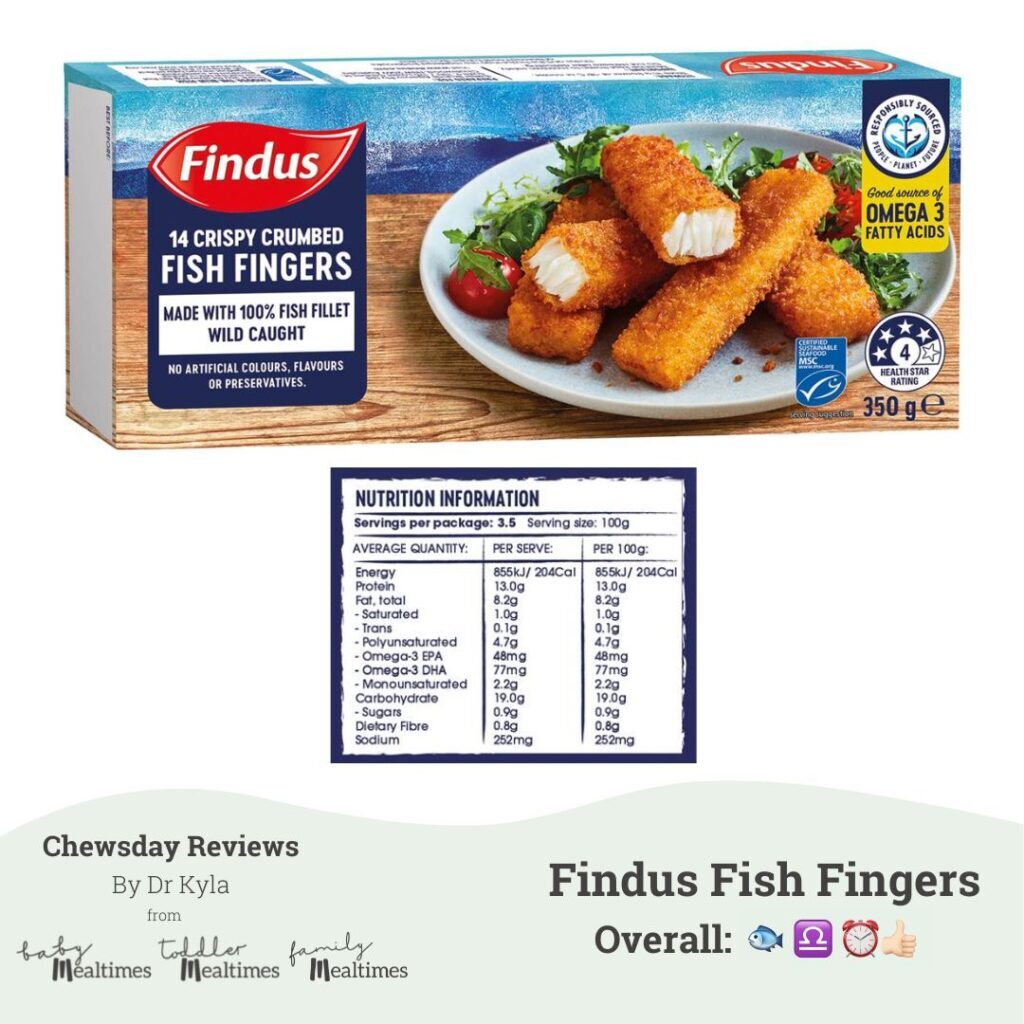
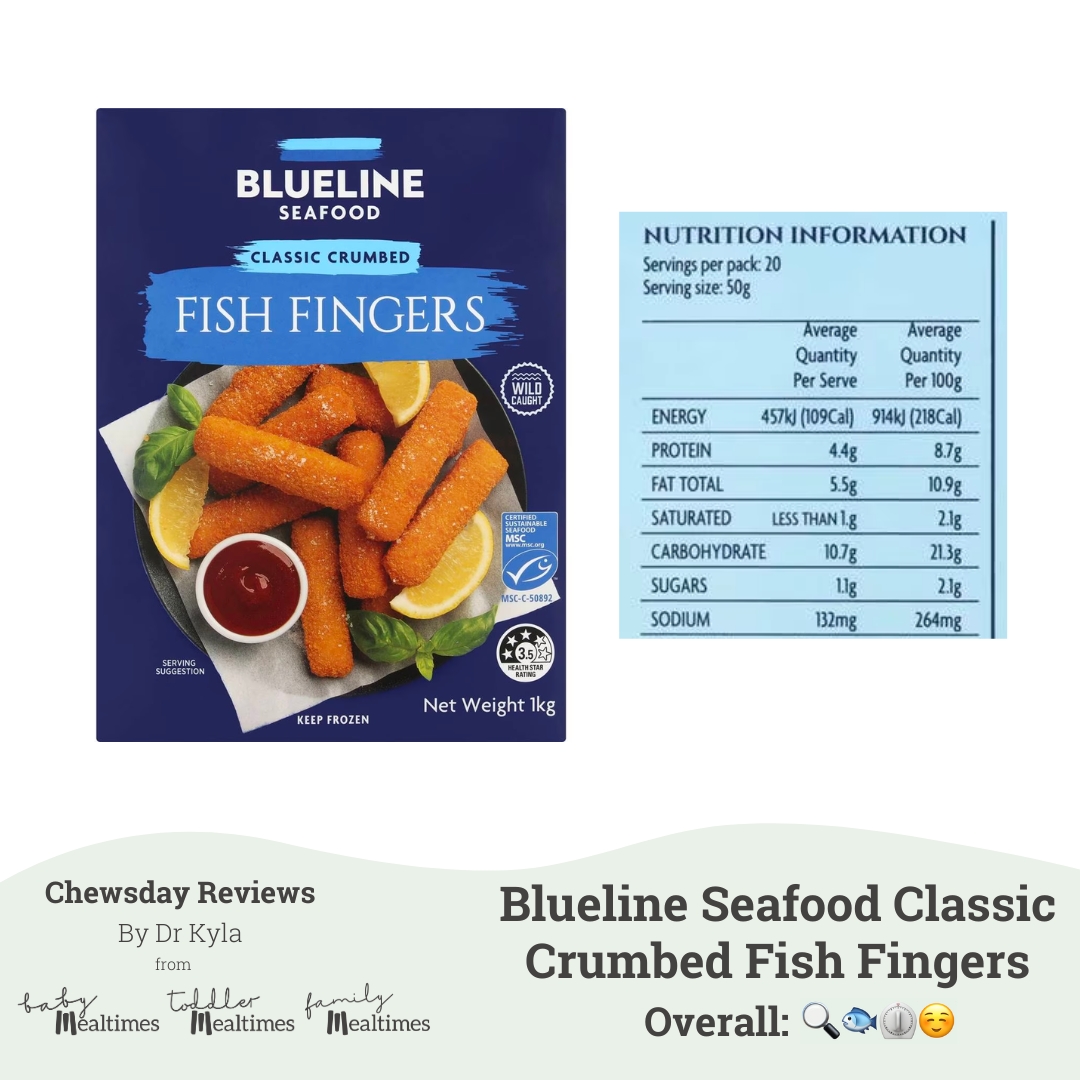
- Sodium (264mg per 100g) is below our target of 400mg per 100g. This is similar to Findus Crumbed fish fingers (275mg per 100g), although higher than Woolworth’s fish fingers (93mg per 100g).
- Blueline Seafood fish fingers are low in sugar at 2.10g per 100g, however this is mostly added sugar, so not a true positive.
- The saturated fat (2.1g per 100g) content meets guidelines, just like most other fish fingers.
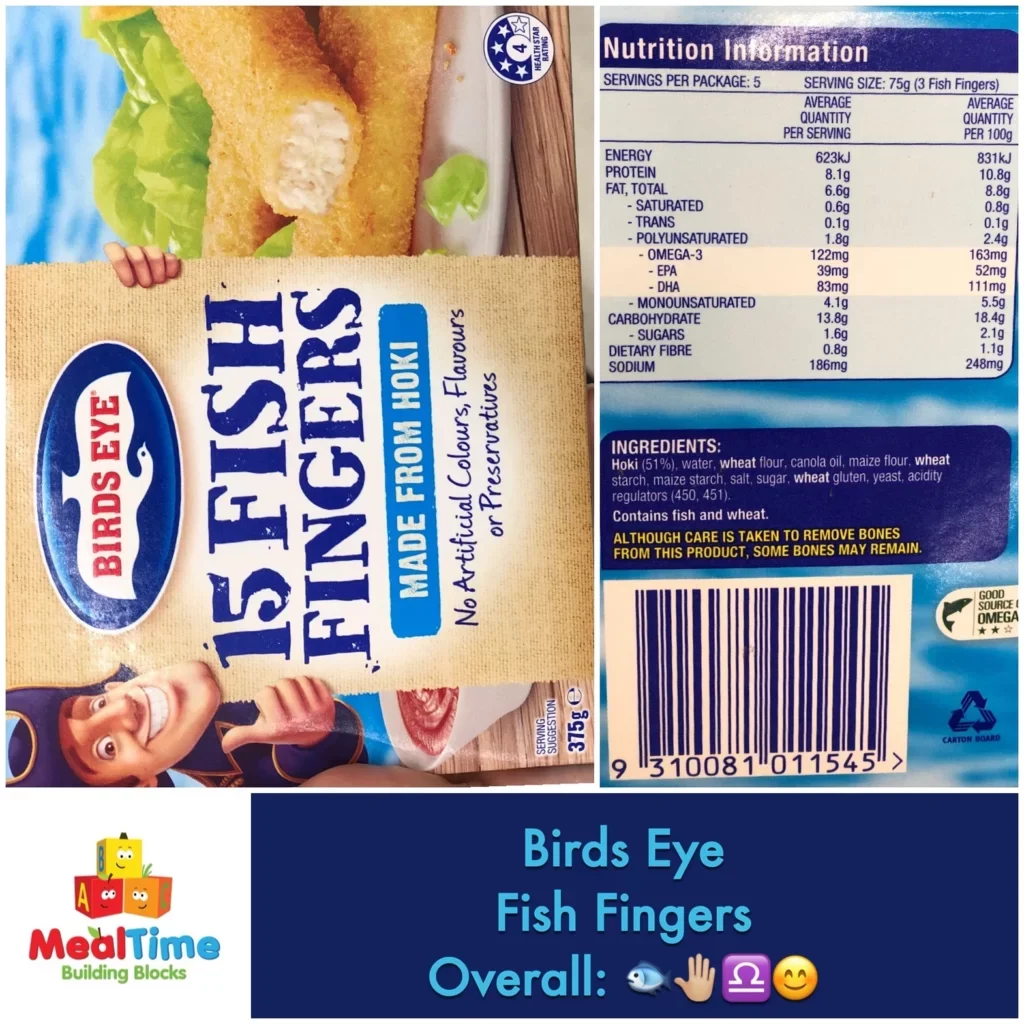
- At $8.50 per kg, Blueline Seafood fish fingers are one of the cheapest fish fingers on the market. For comparison, Birds Eye fish fingers cost $11.50 per kg and Findus Crumbed fish fingers $14.29 per kg.
- At 30%, the fish content in these fish fingers is lower than most, including Birds Eye fish fingers (51%) and Findus Crumbed fish fingers (58%). Most fish fingers contain between 50-65% fish, with the top spot going to Coles Crumbed fish fingers at 65%.
- Pollock and Southern Blue Whiting are sources of n-3 fatty acids (previously called omega 3). But, the amount of n-3 fatty acids isn’t specified on Blueline Seafood’s nutrition information panel, which isn’t helpful if you want to know how much n-3 fatty acids these fish fingers provide.
- I don’t love that these fish fingers are made in China, although from what I can tell from the packaging, the fish is from an Australian fishery. I’d like to know more about this, but it’s not easy info to find.
- “MSC blue fish tick label.” This indicates the fish has been sustainably sourced. You can search the MSC-C 5 number code that sits alongside the label, to trace back where the seafood came from. The ones on the pack I looked at have an Australian address.
- Overall, Blueline Seafood Classic Crumbed Fish Fingers are low in actual fish, and not something I’d recommend.
- Findus Crumbed Fish Fingers are a no added sugar alternative, but they cost an extra penny.
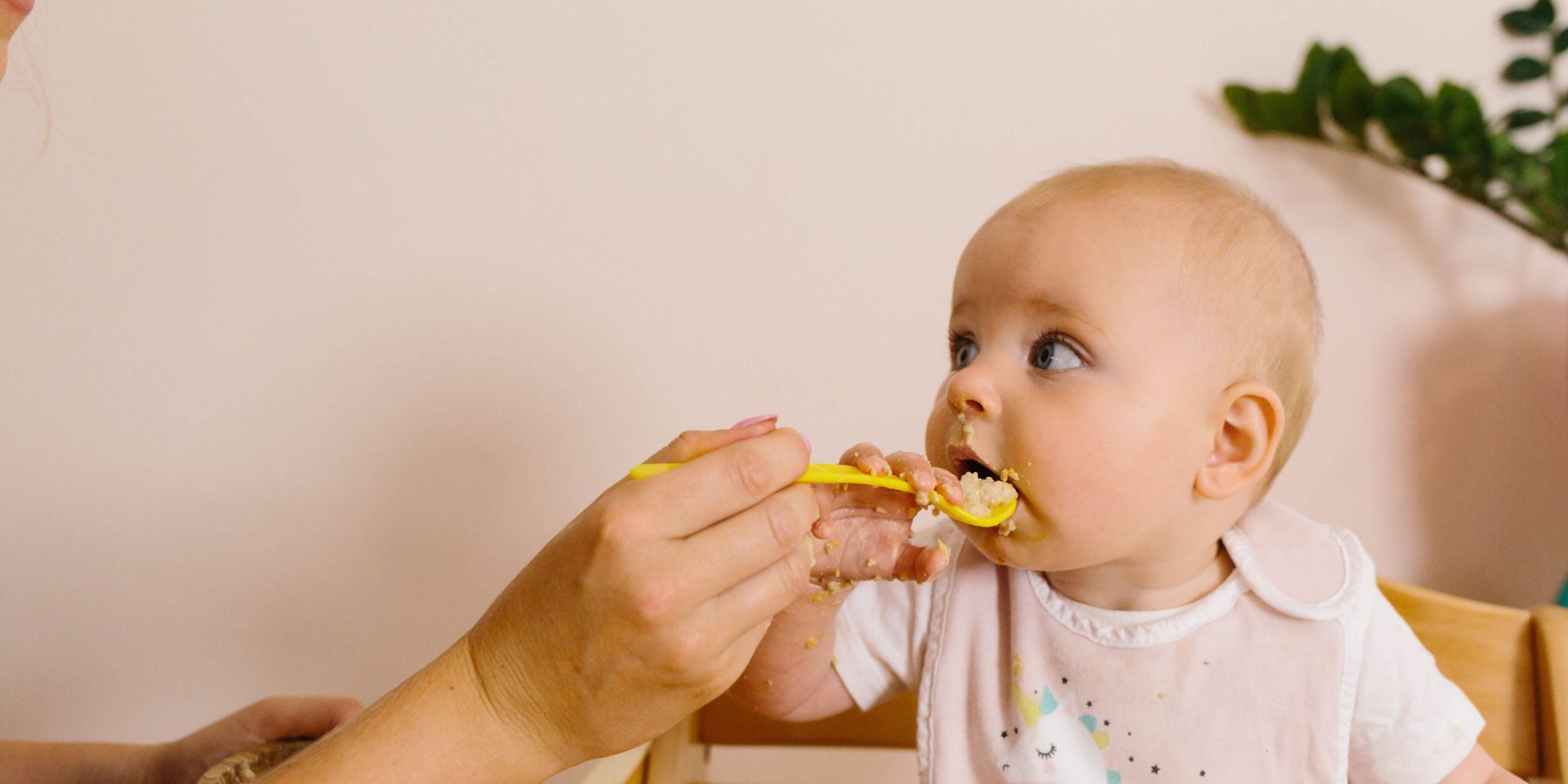
- A whole piece of fish is a great, nutritious alternative whenever you can choose it. For children sensitive to different flavours and textures, fish fingers can be a step towards crumbed fish and then plain fish.
The composition of food products changes regularly. The nutritional values of the products in this Chewsday Review were correct at the time of publishing.