Mamia Rice Rusks | Chewsday Review
An Aldi buy at a fraction of the cost of Baby Mum-Mums. How will these baby crackers stack up when it comes to the crunch?
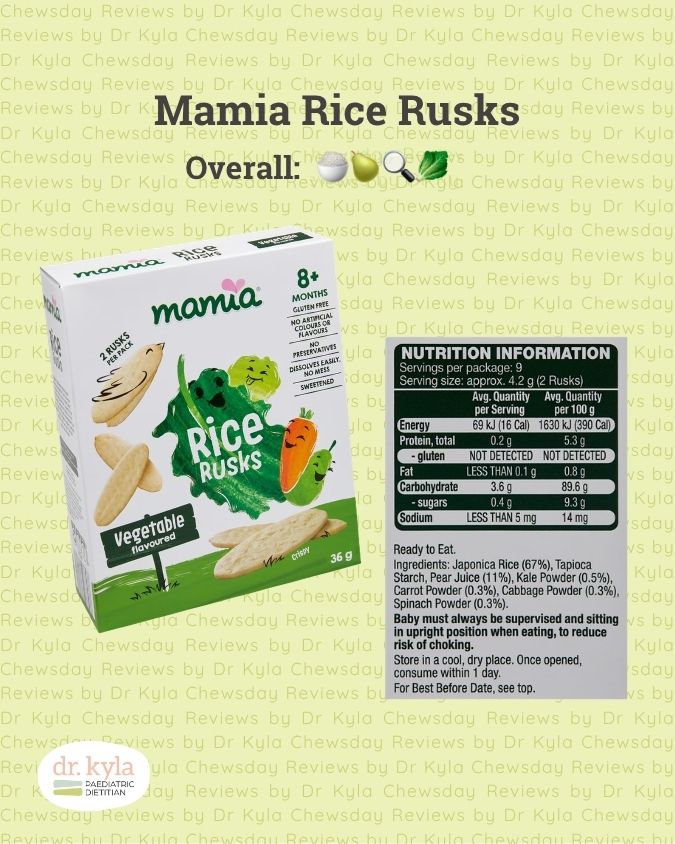
- Japonica Rice (67%), Tapioca Starch, Pear Juice (11%), Kale Powder (0.5%), Carrot Powder (0.3%), Cabbage Powder (0.3%), Spinach Powder (0.3%).
- These “vegetable flavoured” rusks contain more fruit juice (11%) than vegetable powders (1.4%).
- Allergens: nil. States that it is free from milk, peanuts, soy, fish, sesame and eggs.
- Like Baby Mum-Mums, these rusks have a bite and dissolve texture, meaning they start to dissolve as soon as your baby puts it in their mouth. They’re an easy size to hold, and can be helpful for little ones building up confidence with finger foods.
- They’re an easy way to offer toppings like leftover puree, hommus or nut butter, for babies who aren’t ready for trickier textures like Cruskits or toast strips yet.
- Mamia Rice Rusks contain no common allergens, making them suitable to offer before you’ve introduced common allergens like wheat and soy, or for babies with these food allergies. Baby Mum-Mums are also free from common allergens, as well as being manufactured in a nut-free environment.
- Saturated fat and sodium (salt) content meet my criteria.
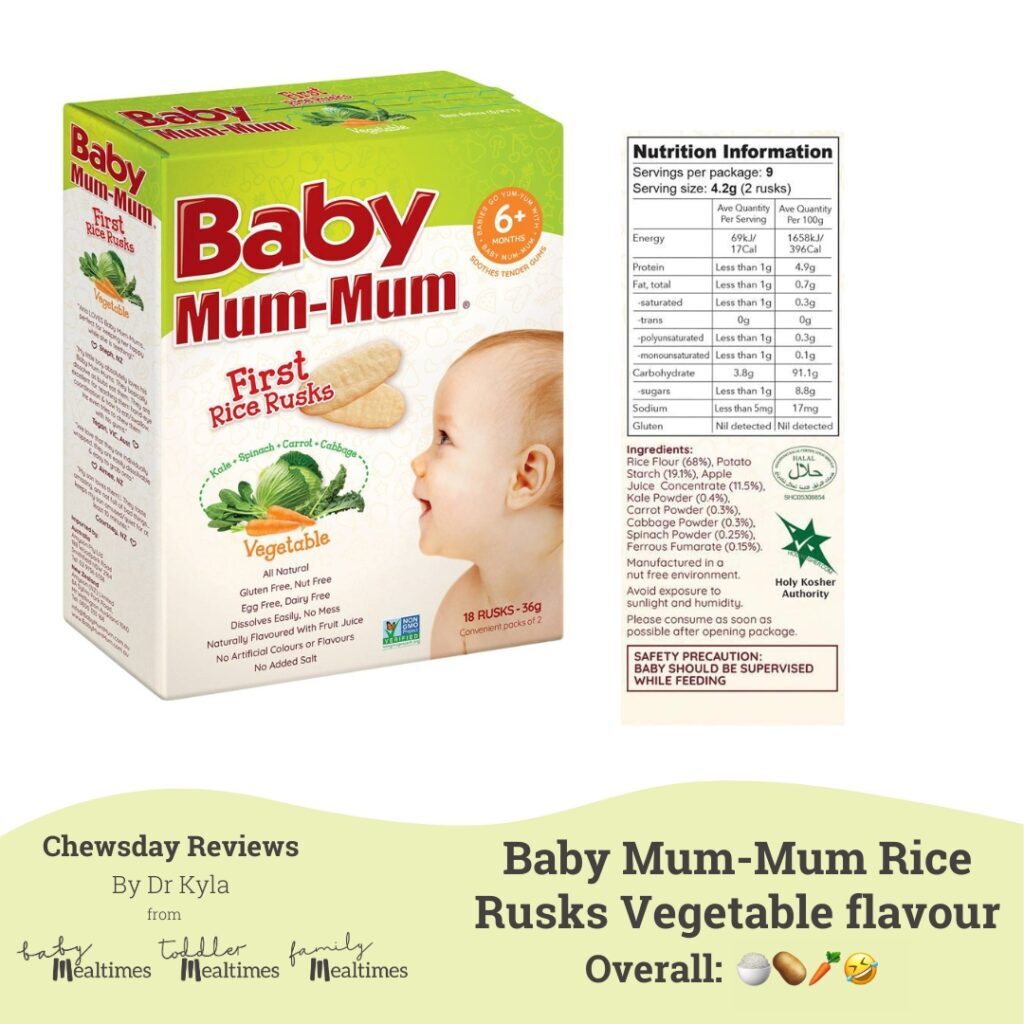
- Mamia Rice Rusks have no added iron, which is a key nutrient when starting solids. Baby Mum-Mums are iron fortified, providing approx. 2.1mg of elemental iron per two rusks (19% of a 7-12 month old baby’s daily needs).
- Per serving (4.2g or 2 rusks), these rusks provide a small amount of carbohydrate from the rice and tapioca starch, and not much else. Really most of the nutrition comes from what you put on top of it.
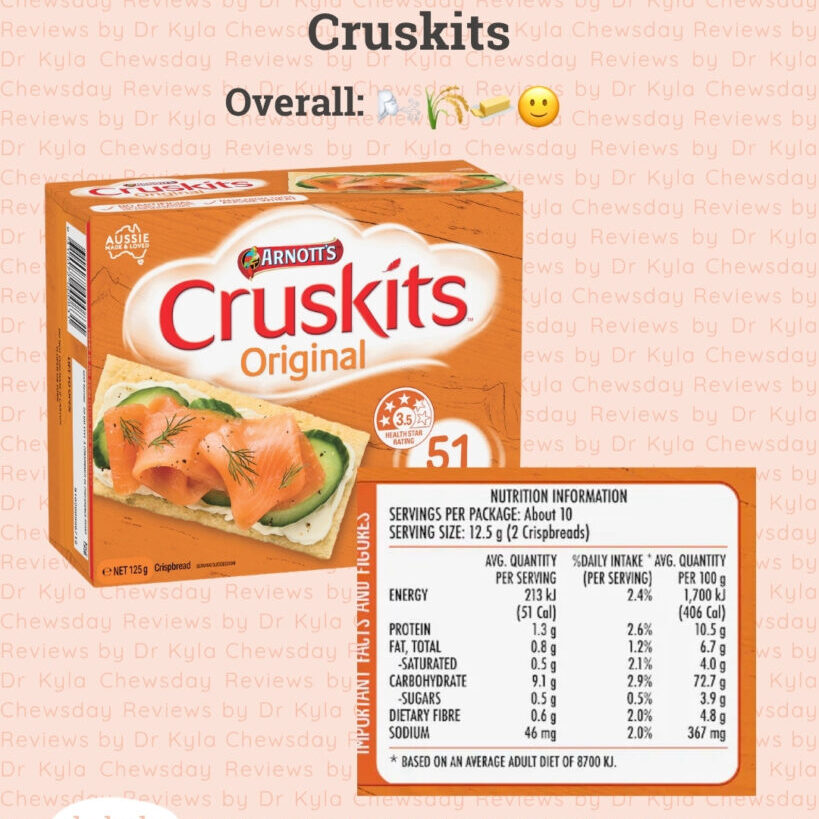
- These contain pear juice which contributes to a sugar content of 9.3g per 100g. This is more than other crackers and crispbreads, like Cruskits, plain rice cakes and corn thins, but similar to Baby Mum-Mums. Technically it is still within guidelines (<15g sugar per 100g) and only works out to 0.4g per two rusks but it feels like an unnecessary addition.
- Although Mamia Rice Rusks are cheaper than Baby Mum-Mums (25c vs. 43c per pack of two rusks), they are still expensive for what you get, which is mostly rice and tapioca starch. They come in at $63 per kg, which is almost double the price of other crispbread like Cruskits or Orgran Crispibread ($32 per kg).
- Although the individually wrapped packs are convenient, that’s a lot more soft plastic than a single packet of crispbread.
- Only available at Aldi, so it’s an extra trip if you don’t do your main shop there.
- “Vegetable flavoured”. This is a real stretch when there is more pear juice (11%) than all of the vegetables combined (1.4%), which are in powder form. The veggie characters are front and centre on the pack too. Unsurprisingly, the rusks taste sweet rather than like kale, cabbage or carrot. The vegetable powders are really added for marketing purposes.
- “Dissolves easily, no mess.” Yes, if they’re offered without a topping. And I’d argue low mess rather than no mess – sticky rusk pieces can still turn up in lots of unexpected places.
- “No artificial colours, flavours or preservatives.” True, but I’m not sure that there is much of the “natural” vegetable left by the time it’s been turned into a powder, then a cracker.
- “Sweetened”. Yep, with pear juice. This is part of the specific labelling requirements for infant foods in the Australia New Zealand Food Standards Code.
- “8+ months”. The texture is very similar to Baby Mum-Mums, which are labelled as 6+ months. Manufacturer recommendations can vary, so always check the texture of a food yourself before offering to your baby for the first time.
- Mamia Rice Rusks are a handy vessel for toppings, making them a useful way to offer iron-rich purees for babies going through a period of spoon refusal. I wouldn’t recommend offering them regularly on their own.
- I prefer Baby Mum-Mums for the benefit of added iron. And if you can grab Baby Mum-Mums on special, the price is only slightly more than Mamia Rice Rusks.
- Cruskits are another more cost-effective option without individual wrapping, but they do contain some common allergens and are a slightly more advanced texture.
- To access all of my guides for crackers and crispbreads for babies, join Baby Mealtimes now.
The composition of food products changes regularly. The nutritional values of the products in this Chewsday Review were correct at the time of publishing.