Orange ‘C’ | Chewsday Review
Today's Chewsday Review features a product that's been around for a while. In fact, I remember kids having it in their lunch order back when I was in primary school, and I graduated from there 20 years ago! Presenting Orange 'C'...

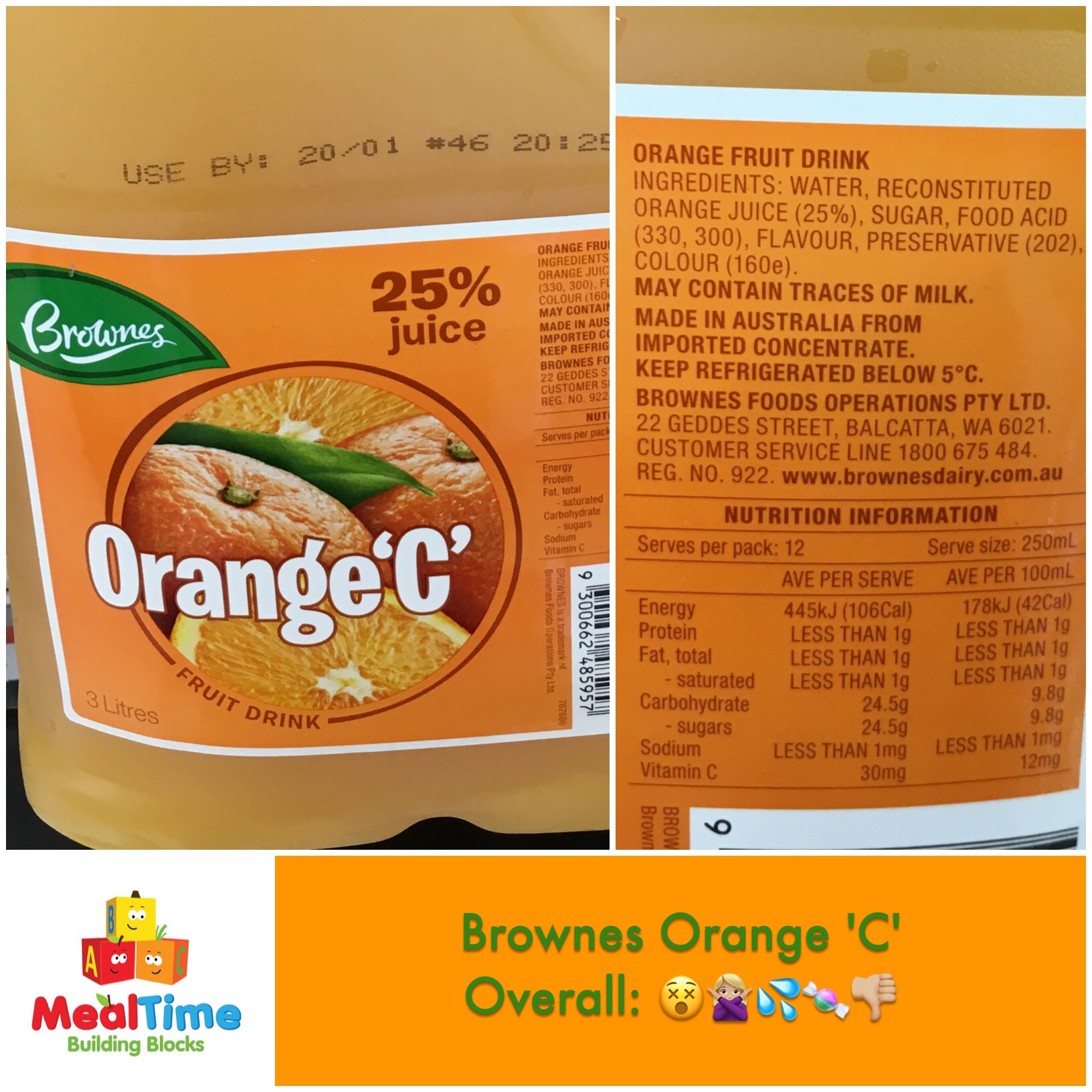
- Water, reconstituted orange juice, sugar, food acid, flavour, preservative, colour.
- Orange juice makes up 1/4 of this product, and comes from imported concentrate. Fruit juice concentrate is juice with most of the water removed. This makes it cheaper for companies to transport because the total volume is less. It’s heat-treated to kill any bugs, which also destroys some of the naturally occurring Vitamin C. The concentrate is then mixed with water to ‘make’ juice. I suspect that this concentrate is imported because oranges are not seasonal in Australia at the moment. It’s also probably cheaper.
- The food acids are citric acid and ascorbic acid. Ascorbic acid is technically vitamin C, and these two acids are used for flavouring and to prolong the shelf life of the juice. The preservative is potassium sorbate, which prevents growth of mould and bacteria. The colour is a carotenoid normally found in citrus foods, and added back to enhance the orange colour.
- Common allergens include: technically none. However, the label says it may contain traces of milk!
- ummmmmmm low in saturated fat and sodium- because it’s a food made up entirely of carbohydrates.
- Technically, this is NOT a fruit juice. It’s actually classified as a fruit drink because it only contains a small amount of heavily diluted juice, with the addition of sugar. It’s more like cordial than juice. This means that it provides very little nutrition, and you’re paying mostly for water and sugar (which is much cheaper to produce than real fruit!)
- Exceeds sugar guidelines for drinks. This product has 9.8g of sugar per 100g, which is higher than the upper recommendation of 7.5g/100g. This means that a 250mL glass of ‘juice’ would provide 24.5g of sugar (about 5 teaspoons). As a reference, Coca-Cola has 26g of sugar per 250mL serve and 100% orange juice has about 20g of sugar per 250mL serve.
- The name Orange ‘C’ suggests that this product is a good source of vitamin C. It does contain 30mg of vitamin C in a cup, which provides just under the daily requirements for a young child. In comparison, a cup of 100% fruit juice has 30% more vitamin C. Having said that, 2 slices of kiwi fruit would give you the same amount, as would a quarter of an orange- and both of these options would have less sugar and more fibre.
- No other marketing claims, which isn’t surprising!
- I’m not a big fan of fruit juice for kids in any instance, because it fills up little tummies without providing the fibre of real fruit. However, this fruit drink is COMPLETELY unnecessary. If you want to include fruit juice in your diet, then consider juicing the fruit yourself, or buying 100% fruit juice (with no added sugar) and dilute it as desired. This product is expensive sweetened water.
- Whole fruit is a much better option!
The composition of food products changes regularly. The nutritional values of the products in this Chewsday Review were correct at the time of publishing.
Hungry for More? Related Reviews
Sorry, we couldn't find any Reviews that match that criteria.