Chobani No Sugar Added Greek Yoghurt Strawberry | Chewsday Review
Will Chobani No Sugar Added Greek Yoghurt be the yoghurt tub of my dreams? Find out if I predict a cult(ure) following for this yoghurt, or if it’s missed the mark.

- Skim Milk, Cream (Milk), Water, Strawberries (5%), Tapioca Flour, Natural Flavours, Citrus Fibre, Enzyme (Lactase), Fruit and Vegetable Extracts, Salt, Live Cultures (Milk).
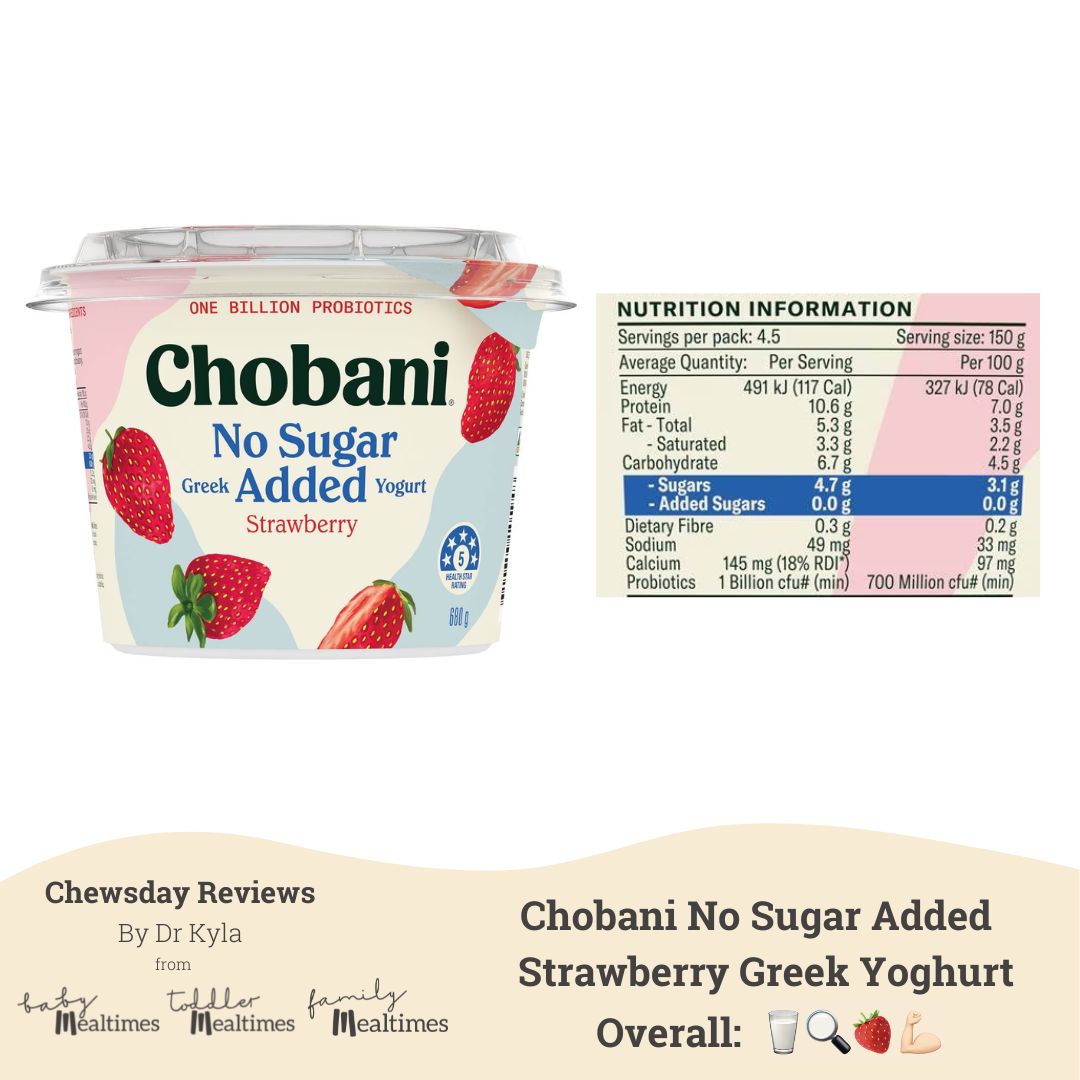
- This product contains 5% strawberries, which works out to 2-3 strawberries in the whole 680g tub. I would have hoped for more fruit in a strawberry flavoured yoghurt!
- This yoghurt isn’t marketed as being lactose free, but it does contain lactase which is an enzyme used to break down lactose, the naturally occurring sugar in milk.
- Allergens: milk
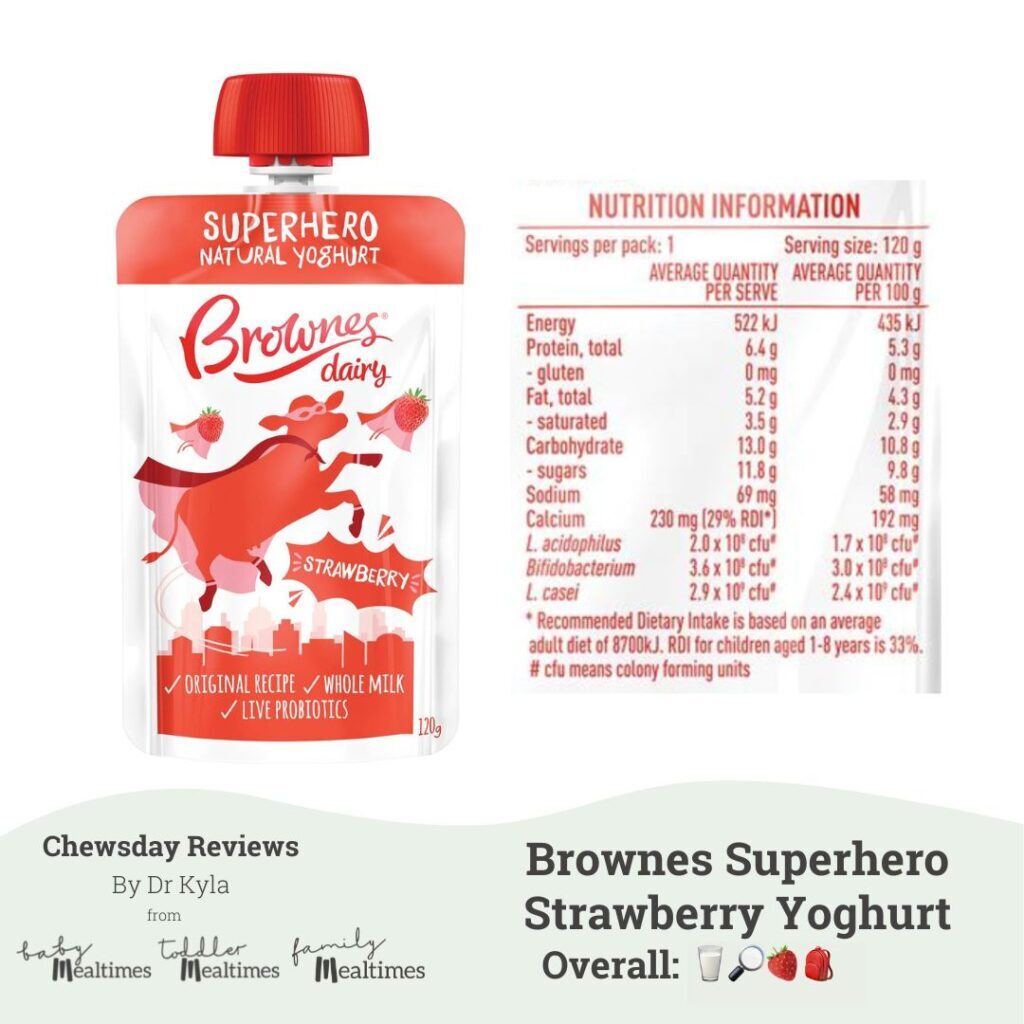
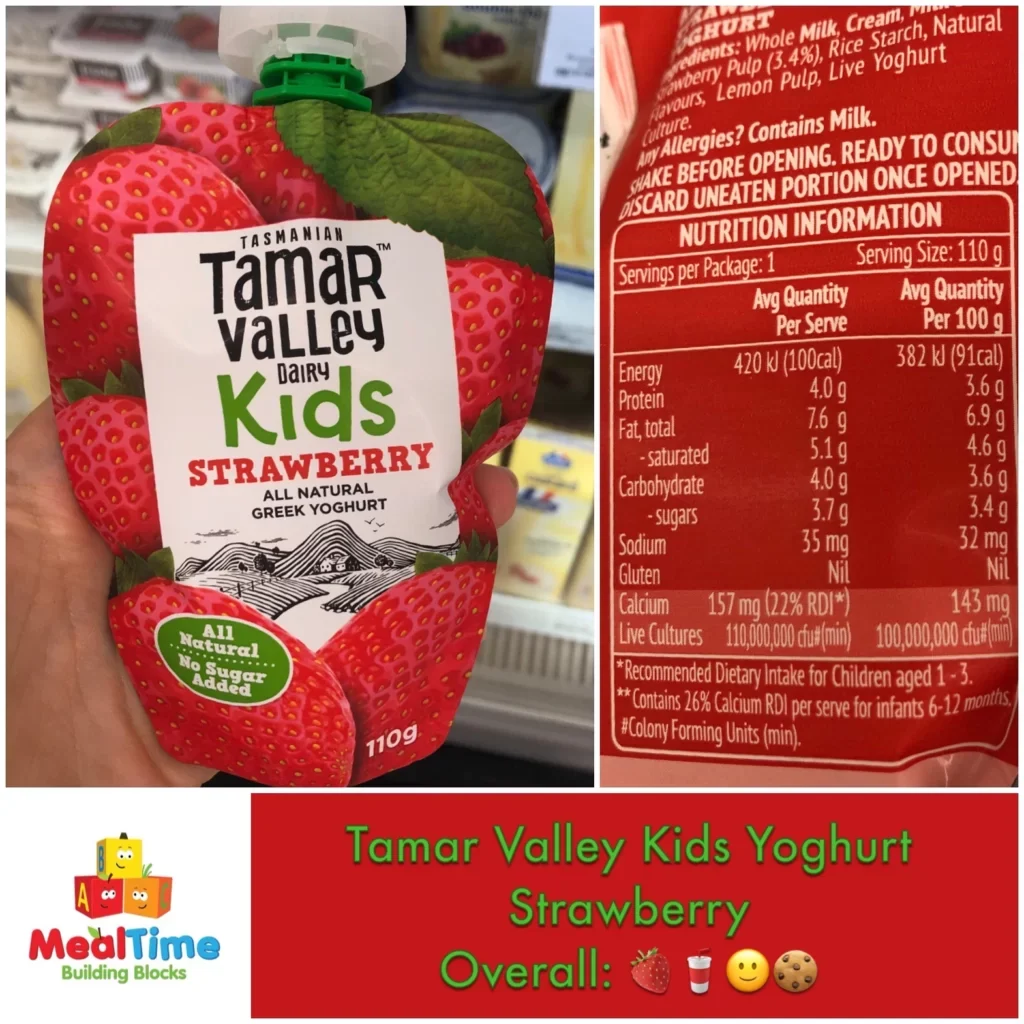
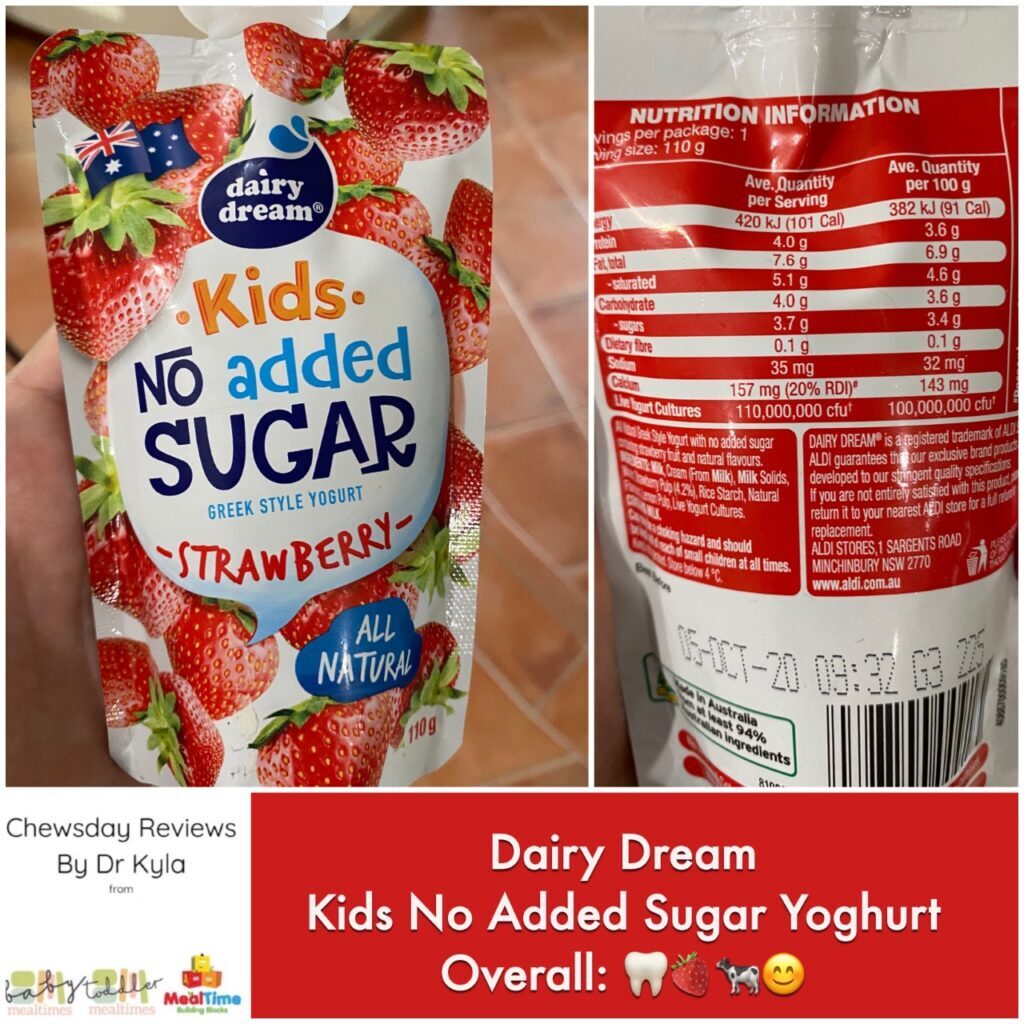
- Chobani No Sugar Added Greek Yoghurt comes in well under our sugar guidelines. At 3.1g of sugar per 100g, the sugar content is comparable to the Tamar Valley and Aldi Dairy Dream no added sugar yoghurt pouches. This is a lot lower than most flavoured yoghurt products on the market, which range from 6g to 16g of sugar per 100g.
- The tub! This is currently the only flavoured yoghurt with no added sugar in a large tub that I’m aware of. Decanting yoghurt from a tub into smaller containers results in less soft plastic use than individual yoghurt pouches.
- As with most other dairy yoghurts, total and saturated fat is within recommendations and it contains live cultures.
- At 97 mg per 100g, the calcium content of this yoghurt falls short of our minimum calcium target of 120mg per 100g. There are lots of high calcium yoghurt options on the supermarket shelves, so this is disappointingly low. Interestingly, none of the Chobani yoghurt range meet our calcium criteria.
- While cheaper than buying individual pouches, Chobani No Sugar Added yoghurt is more expensive than other flavoured yoghurt tubs ($10 per kg compared to Brownes Natural Yoghurt strawberry at $6 per kg, or Mundella Greek Vanilla at $8 per kg).
- The protein in yoghurt ranges from 3g per 10g per 100g, with most dairy yoghurts having 4-6g of protein per 100g. Chobani No Sugar Added yoghurt is on the higher end at 7g per 100g due to it being made from skim milk. Most kids get enough protein from their diet, so high protein yoghurt isn’t necessary. I wouldn’t recommend this yoghurt for babies or younger toddlers as excessive protein can put a strain on their developing kidneys.
- “Made with just milk and cultures, our yoghurt is strained so it’s naturally thick and creamy, then blended with strawberries.” Not true! It contains tapioca flour and citrus fibre to thicken the yoghurt. Thickeners aren’t of concern, but there are plenty of plain, unflavoured natural or Greek yoghurts available which only contain milk, milk solids, cream and cultures. As for strawberries, there are hardly any in the yoghurt, so I wouldn’t buy this product for the fruit component.
- “Made with only natural ingredients, no sweeteners added and high in protein…breakfast and snacking never felt so good.” Classic diet culture strikes again. We don’t want our kids to only ‘feel good’ about eating foods that are perceived to be healthy.
- Overall, while I’m a fan of the no added sugar and packaging in a tub (rather than a pouch), I’m disappointed that this yoghurt is low in calcium and unnecessarily high in protein.
- Chobani No Sugar Added Greek Yoghurt could be a reasonable option for kids who eat a range of calcium sources, but I wouldn’t recommend it if yoghurt is the main calcium source for your child.
- Brownes Natural Yoghurt Strawberry or Mundella Greek Vanilla are two other flavoured yoghurt in large tubs which are higher in calcium and cheaper (although they do contain added sugar). Tamar Valley No Added Sugar Yoghurt also comes in a tub and meets our calcium and protein guidelines, but is higher in saturated fat.
- For toddlers, I prefer Farmers Union No Added Sugar Kids Yoghurt Pouch, Woolworths No Added Sugar Yoghurt Pouch or Yoplait Petit Miam No Added Sugar Yoghurt Pouch.
- The search for a flavoured yoghurt option in a tub that ticks all of my boxes continues!
The composition of food products changes regularly. The nutritional values of the products in this Chewsday Review were correct at the time of publishing.