Vitasoy Oat Yoghurt Summer Fruits | Chewsday Review
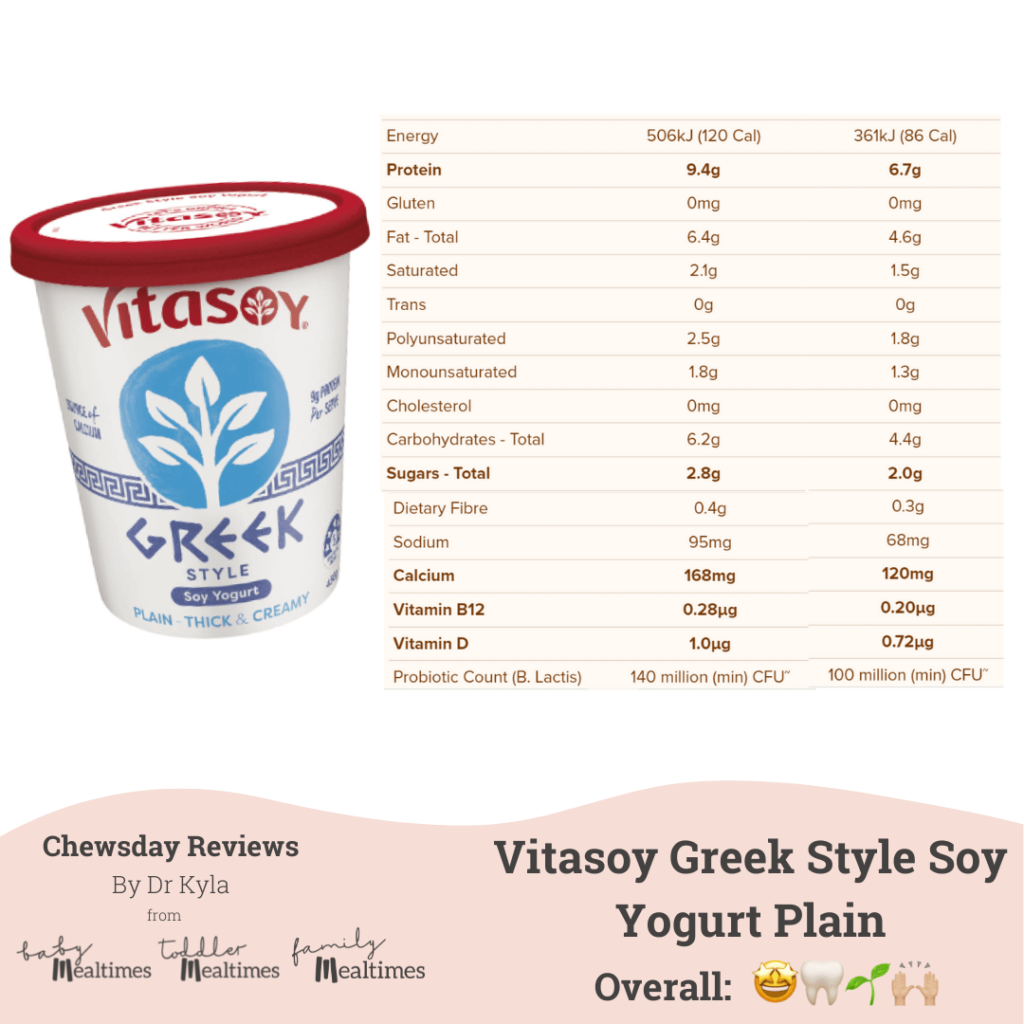
Dairy-free yoghurt options with added calcium are few and far between! Vitasoy Greek Style Soy yoghurt has my tick of approval for dairy-free kiddos, so let’s see how their new oat yoghurt stacks up.

- Oat yogurt (91%) [oat milk (filtered water, whole oats (min. 12%), oat flour), pea protein (4.6%), sugar, cocoa butter, tapioca flour, tapioca starch, mineral (calcium phosphate), natural flavour, sea salt, live vegan cultures, vitamins (vitamin D, vitamin B12)], Summer fruits blend (9%) [mango puree (35%), sugar, guava puree (15%), passionfruit puree (10%), pineapple juice reconstituted (7.37%), water, rice starch, natural flavour, acidity regulators (sodium citrate, citric acid), turmeric extract]. Live vegan cultures: Yogurt cultures: S. thermophilus & L. bulgaricus. Probiotic cultures: B. lactis.
- This yoghurt has added vitamin D, B12 and calcium.
- It contains added sugar, as well as fruit juice and puree.
- Pea protein is used to increase the protein content of oat milk, which is naturally very low in protein.
- A number of ingredients are used to thicken the consistency of the yoghurt (oat flour, tapioca flour, tapioca starch, rice starch).
- Allergens: gluten
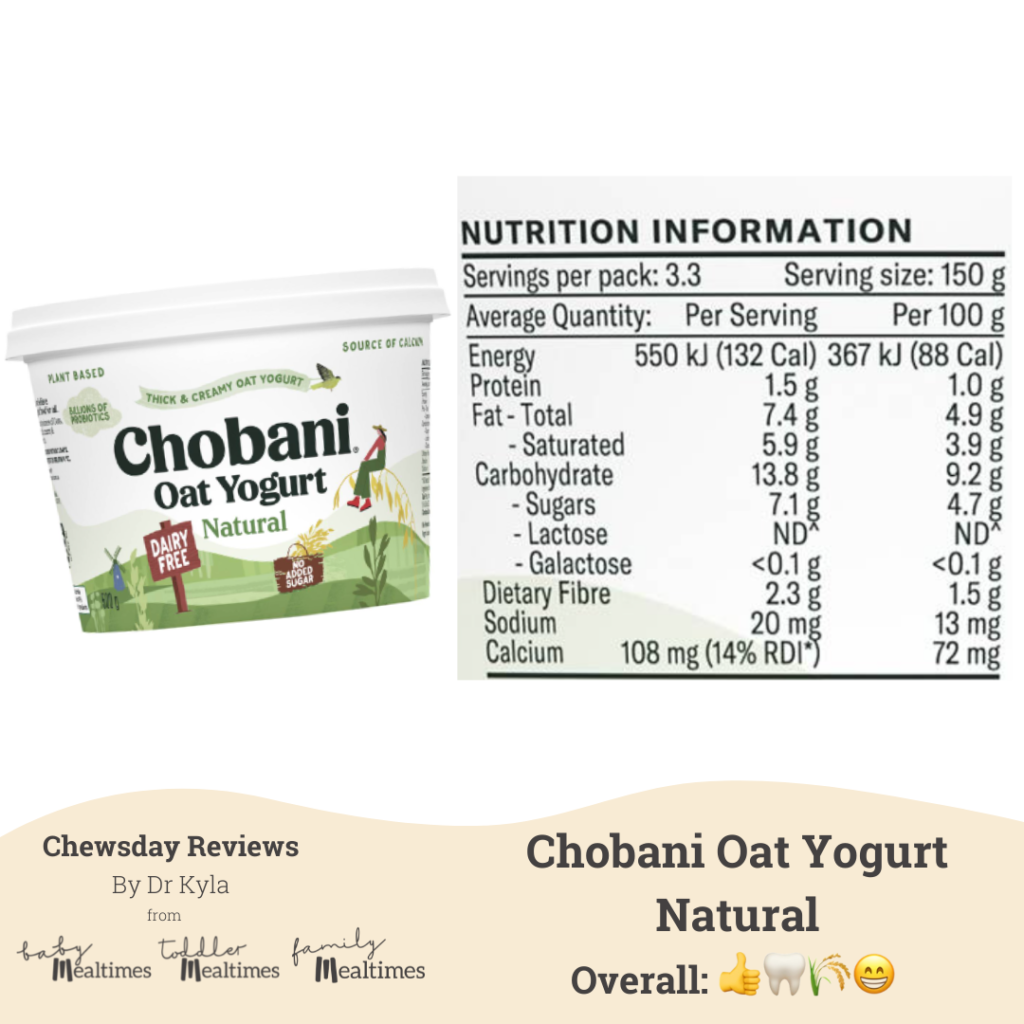
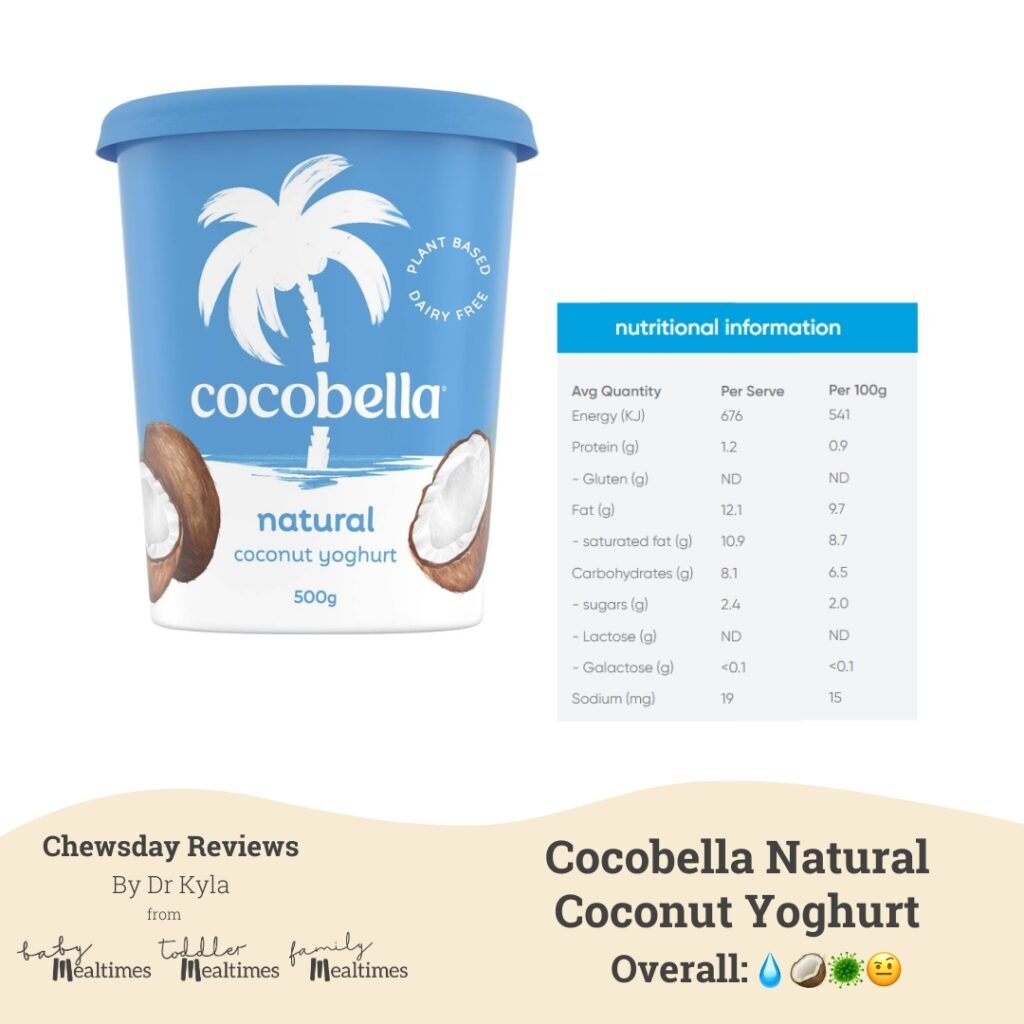
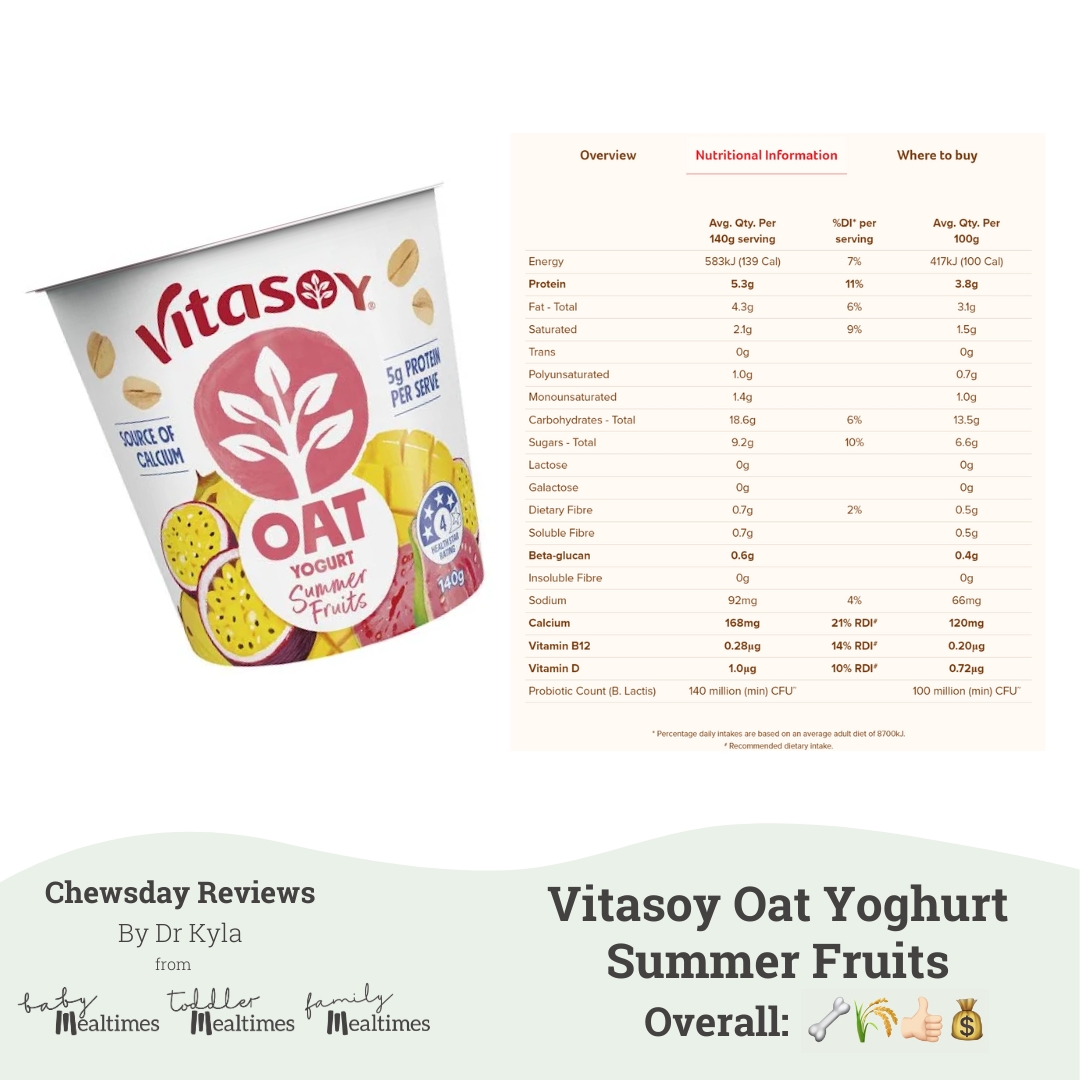
- Added calcium! This is a huge positive for a dairy-free yoghurt, particularly for kids who are unable to consume cow’s milk products. The calcium content of Vitasoy Oat Yoghurt (120mg per 100g) is around double that of Cocobella +Protein Coconut Yoghurt (52mg per 100g) or Chobani Oat Yoghurt (63mg per 100g).
- Sugar content is within guidelines at 6.6g per 100g. Dairy-free yoghurts do not contain lactose (the naturally occurring sugar in cow’s milk), so the majority of sugar in this yoghurt comes from added sugar, with a small amount from the fruit flavouring. This is comparable to the sugar content of other flavoured dairy-free yoghurts e.g. Chobani Oat Yoghurt Vanilla (7.7g per 100g) or Cocobella Vanilla Coconut Yoghurt (5.5g per 100g).
- Thanks to the pea protein, the protein content of this yoghurt (3.8g per 100g) is much higher than other oat and coconut yoghurts, which generally have a protein content of less than 1g per 100g.
- Total and saturated fat are within guidelines, unlike most coconut yoghurts.
- Price! At $2.14 per 100g, this yoghurt doesn’t come cheap. It’s a comparable price to other dairy-free yoghurts in an individual tub (e.g. Cocobella +Protein Coconut Yoghurt), but almost double the price of Chobani Oat Yoghurt in a larger tub ($1.30 per 100g).
- This yoghurt comes in vanilla or fruit flavours in a 140g tub. Although it’s reasonably low in added sugar, I’d love to see an unflavoured variety in the range (preferably in a larger tub size to reduce packaging).
- Source of protein and calcium. Tick.
- Source of vitamin D and B12. True, and likely added to make the product appealing to the vegan and vegetarian market. It’s important to note that the amounts added are small (less than 15% of recommended daily intake), so not suitable to treat deficiency of these nutrients.
- The 4 star health rating is well deserved in comparison to other dairy-free yoghurts.
- Overall, Vitasoy Oat yoghurt is a good choice in the dairy-free yoghurt market due to its added calcium and protein, as well as sugar and saturated fat being within guidelines.
- This product could be a convenient option for dairy-free kids for lunchboxes or on-the-go, but in terms of price, tub size and versatility my pick would be Vitasoy Greek Style Soy Yoghurt Plain.
- Chobani Oat Yoghurt is a cheaper option available in a larger tub, although it is lower in calcium than Vitasoy Oat Yoghurt.
The composition of food products changes regularly. The nutritional values of the products in this Chewsday Review were correct at the time of publishing.