Cocobella Coconut Yoghurt | Chewsday Review
Cocobella are a popular brand when it comes to dairy-free yoghurts, but let's see if their original natural coconut yoghurt is worth going nuts over.

- Coconut yoghurt (water, coconut milk, native starch, tapioca syrup, carob bean extract, agar, yoghurt cultures and probiotics).
- Native starch is a bit vague- there’s no definition for what this is and it’s not clear where the starch is derived from (corn, wheat, rice etc). The product does state it’s gluten free, so it won’t be from wheat.
- Tapioca syrup is a sweetener, just like sugar.
- Contains no common allergens.
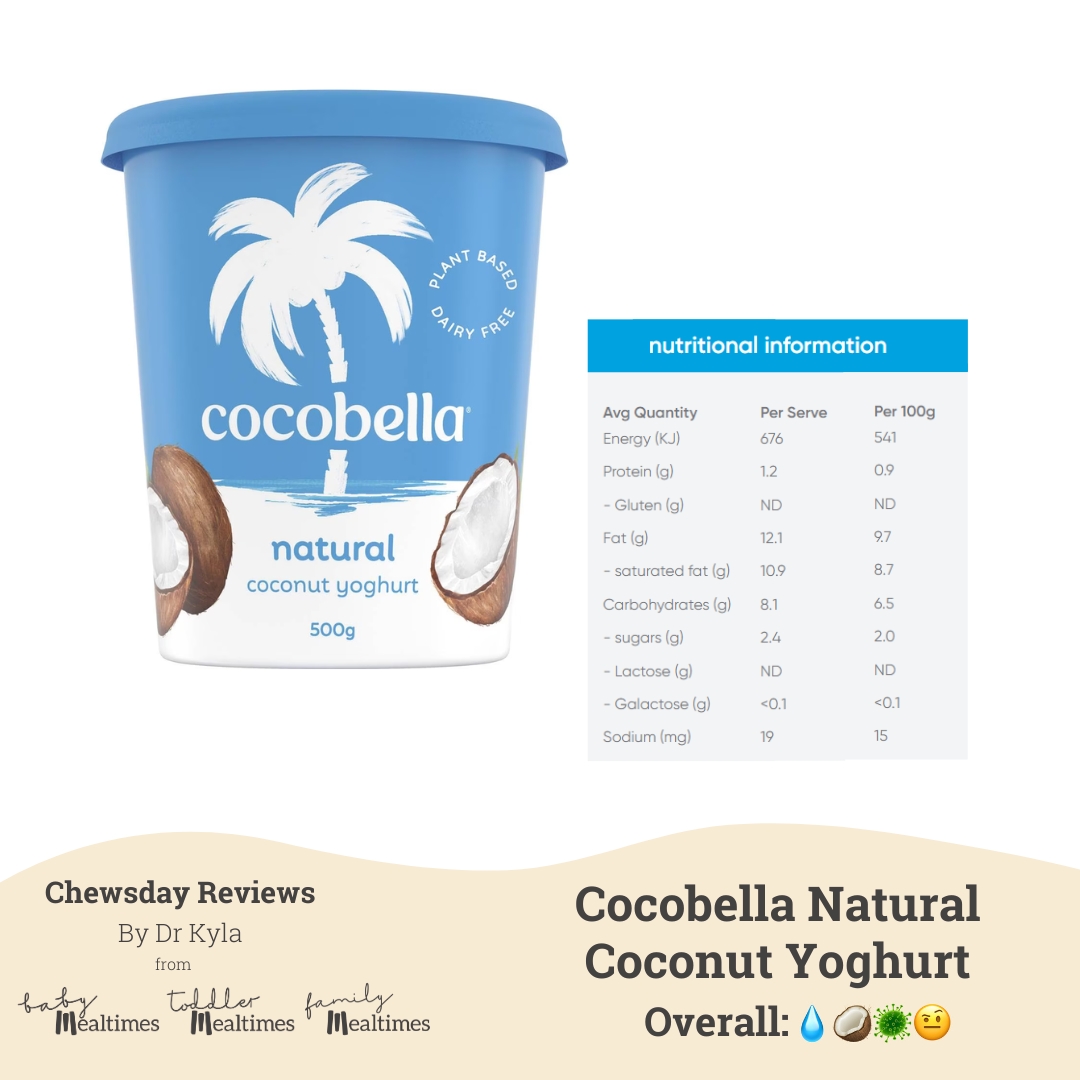
- The sugar content (2g per 100g) meets guidelines and is lower than most dairy yoghurts (but keep in mind that yoghurt will naturally have about 3-6g per 100 of sugar from lactose, without added sugar). The vanilla and fruit flavoured versions have slightly more added sugar but are still reasonably low.
- This yoghurt does contain some probiotics (Bifidobacterium, L. acidophilus, L. bulgaricus, L. paracasei, S. thermophilus.), but it’s unclear whether the amount that’s been added is enough to see any health benefits.
- Total fat content is within recommendations.
- There is no calcium in this product. This is a big concern for me if children are eating this in replacement of dairy or other fortified dairy-free yoghurts. I don’t understand why the manufacturers wouldn’t add calcium, especially when the Cocobella +Protein range and flavoured pouches (but not the tubs!) contain a small amount of added calcium.
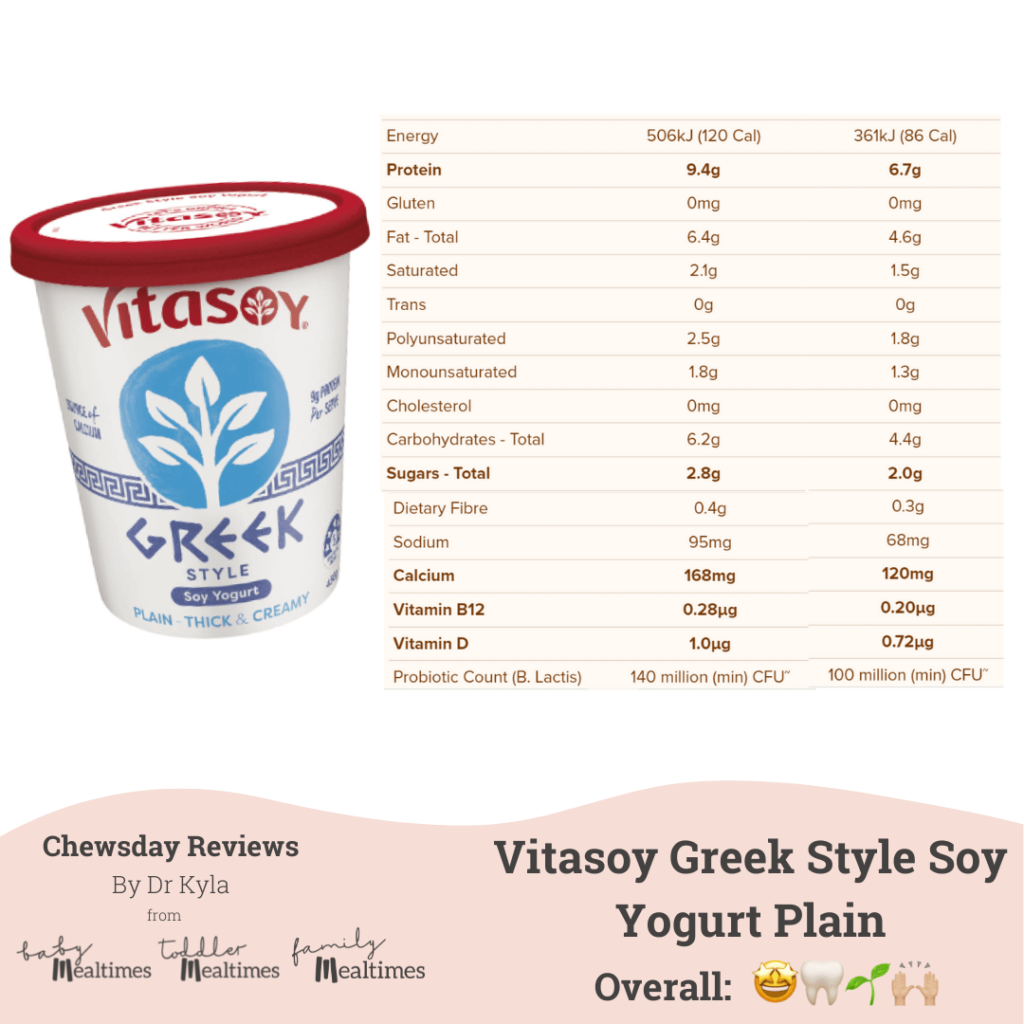
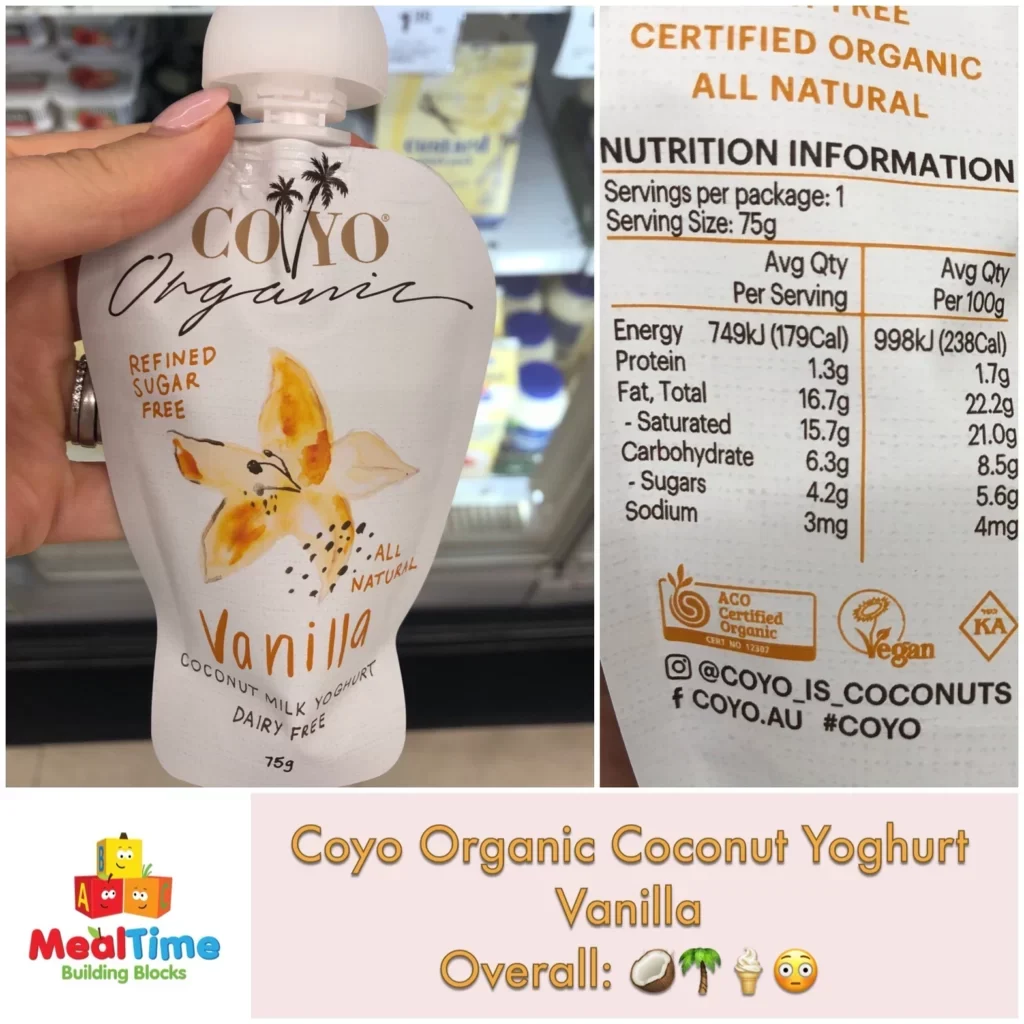
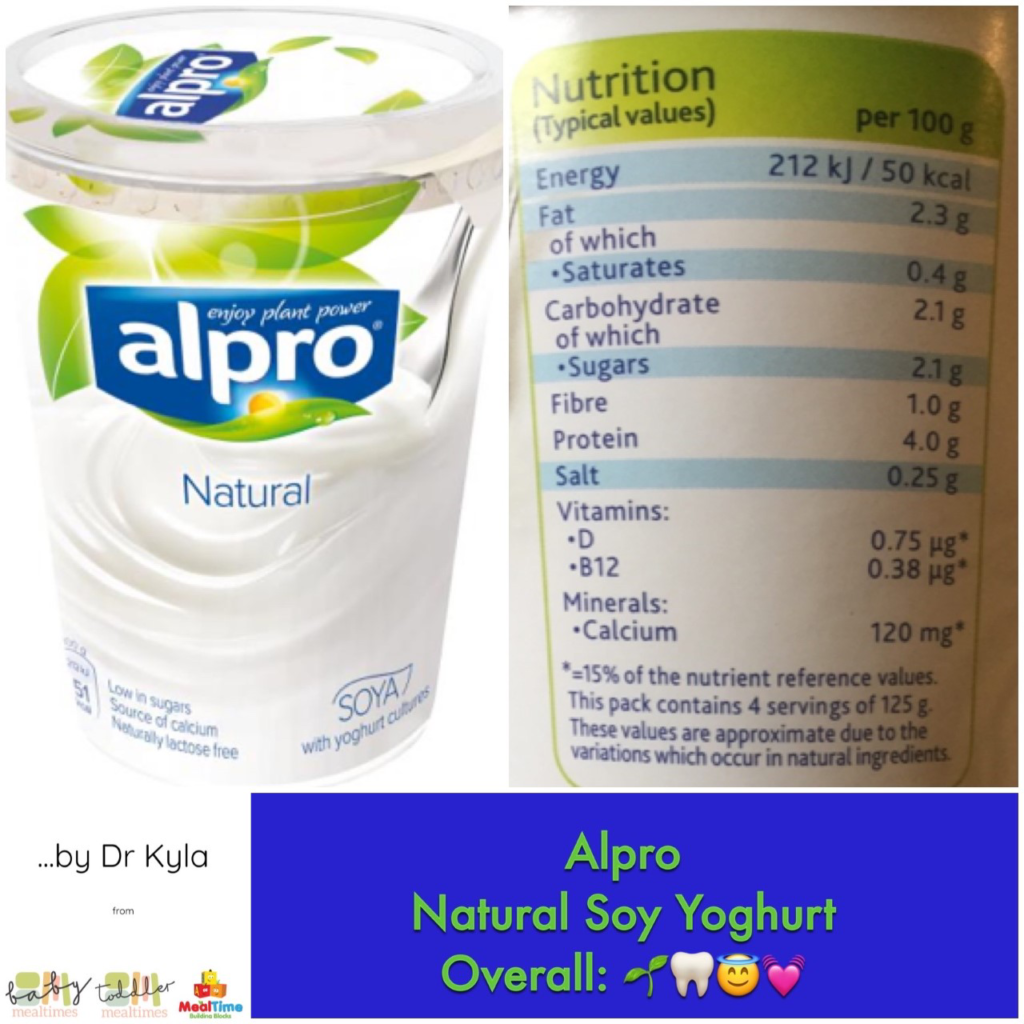
- The saturated fat content is almost three times the recommended limit. It also makes up 90% of the total fat content meaning there’s very little unsaturated fat in this product. Coconuts are naturally higher in saturated fat, so it’s challenging to find a coconut yoghurt lower in saturated fat, but oat and soy-based dairy-free yoghurts do tend to be lower.
- The first ingredient is water, followed by coconut milk, so you’re pretty much paying for water and coconut milk here!
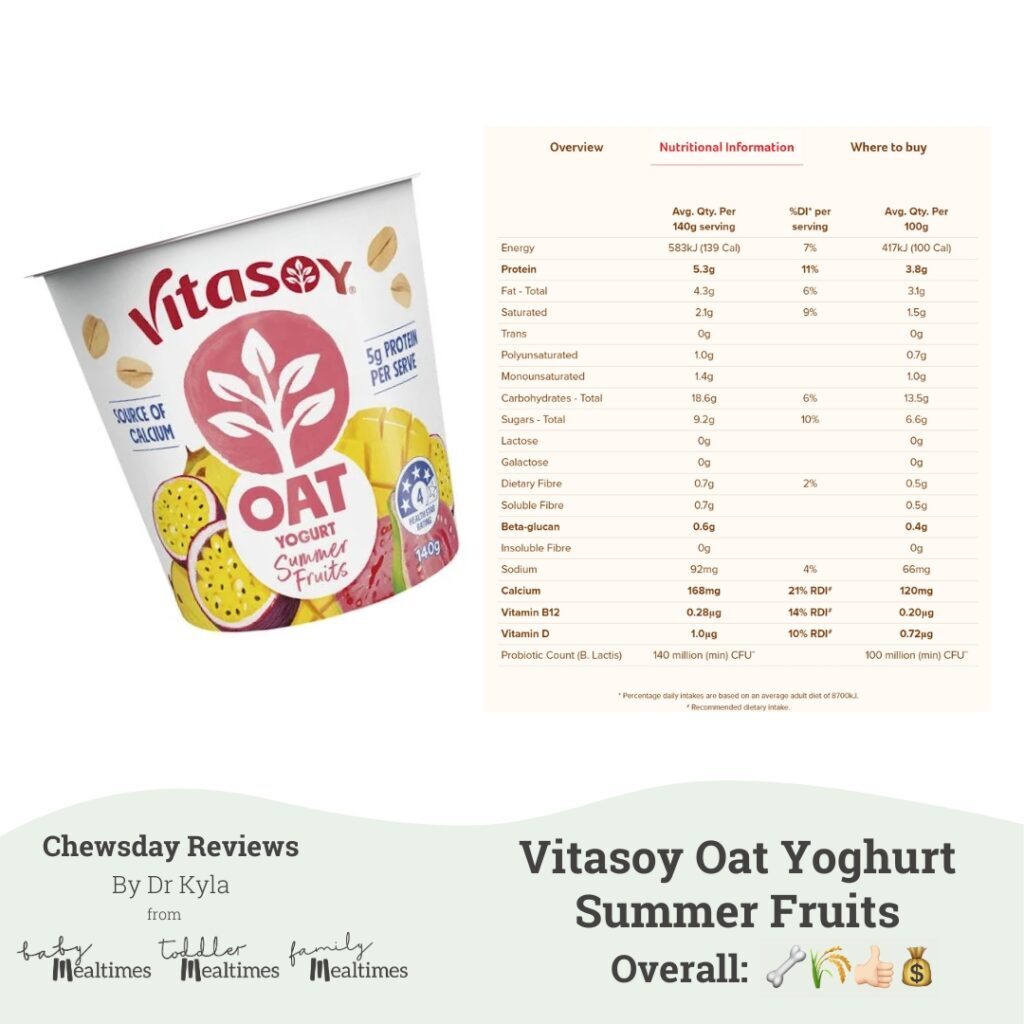
- The protein content is much lower than other yoghurts. I am not usually concerned about protein for most kids, but protein can be a concern for some kids with allergies or those following a vegan diet, so this might be something to consider if your child falls in either of those categories.
- At $6 for a 500g tub or $9 for a 900g tube, this is seriously expensive for a product made mostly from water and coconut milk. Dairy-free yoghurts tend to be more expensive than regular yoghurt- often double the price!
- “No added nasties”. I’m still waiting for someone to tell me what a “nasty” is and clarify which products contain them.
- “Free from dairy and lactose”. This is important for children with a confirmed dairy allergy, but if your child is lactose intolerant I’d recommend you choose a lactose free yoghurt instead of a coconut yoghurt.
- “Vegan friendly”. This is to be expected for a non-dairy yoghurt, so seems a bit of an obvious one.
- “Made in Australia from 50% Australian ingredients”. This means half of the ingredients are imported, so not great for supporting Aussie farmers.
- It is hard to find a suitable yoghurt replacement if your child has to avoid cow’s milk for allergy reasons. This Cocobella tub is ok from a taste point of view or if it’s being used as part of a meal, but I’ll always recommend choosing a dairy-free yoghurt that does contain some calcium when you can.
- The Cocobella Vanilla flavoured pouch contain slightly more added sugar, and while it’s still less than regular yoghurt, it does have some calcium added (75mg per 100ml).
- If your child enjoys this dairy-free yoghurt, you will need to consider other calcium sources such as fortified cereals and dairy-free milk that you can offer regularly. Other foods like sardines, broccoli and almonds, do contain some calcium, but you have to eat a lot to get enough calcium. The John West tinned tuna with ground fish bones added is another option to consider.
- All of my members have access to my guides for choosing dairy-free yoghurt and dairy-free milk (plus more), so if you need support with this then join me now!
The composition of food products changes regularly. The nutritional values of the products in this Chewsday Review were correct at the time of publishing.